












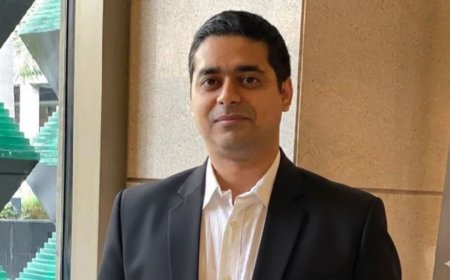























Kalli Purie Unveils 9-Point AI Charter, Calls for Fair Value and Accountability in Journalism
Kalli Purie, Vice-Chairperson and Executive Editor-in-Chief of India Today Group, unveiled a nine-point AI charter at the India AI Impact Summit in New Delhi, calling for fair compensation, transparency, and accountability in the use of journalistic content by artificial intelligence platforms. The framework urges stronger attribution norms, penalties for AI-driven misinformation, and reciprocal value-sharing between technology companies and news publishers, reflecting growing global industry concerns over AI governance and media sustainability.


At the India AI Impact Summit in New Delhi, Kalli Purie, Vice-Chairperson and Executive Editor-in-Chief of the India Today Group, presented a comprehensive nine-point charter aimed at reshaping the relationship between artificial intelligence platforms and news publishers.
Addressing senior media leaders and policymakers, Purie argued that while AI is transforming news production and distribution, it must not undermine the economic and ethical foundations that sustain professional journalism.
Her central position was unequivocal: journalistic work cannot be treated as unrestricted training material for large language models.
Journalism as Democratic Infrastructure, Not Raw Data
Purie framed journalism as an essential public institution rather than a content supply chain for technology platforms. In a diverse and complex media landscape such as India’s—marked by linguistic, regional and literacy variations—verified news organisations play a critical role in shaping informed public discourse.
She warned that reducing newsrooms to data sources for AI systems, without proper safeguards, risks weakening accountability and distorting public understanding. According to her, the credibility and responsibility carried by established media institutions cannot be replicated by automated systems operating without human oversight.
Her remarks echo global industry concerns, as publishers in multiple countries negotiate licensing agreements and seek regulatory clarity around AI training practices.
The Nine-Point Charter: A Blueprint for Fairness
Purie’s proposed framework outlines structural reforms to ensure balance between AI companies and content creators. The key principles include:
-
Fair commercial compensation for journalistic content used in AI systems
-
Transparency in how AI models process and deploy news material
-
Mandatory attribution and traceability standards
-
Recognition of journalism as a public good
-
Incentives for reporting that delivers measurable societal impact
-
Proper valuation of verified institutional reporting
-
Strong penalties for AI-generated misinformation and hallucinations
-
Regulatory parity between legacy media and digital platforms
-
Reciprocal contribution from major technology firms benefiting from news ecosystems
The charter advocates enforceable standards rather than voluntary commitments, signaling a push for clearer governance mechanisms in the AI era.
“AI-First, But Human-Led” Newsrooms
While pressing for regulation, Purie emphasised that her organisation has embraced AI innovation. The India Today Group has experimented with AI-driven anchors, automated storytelling tools and voice-cloning technologies as part of its digital strategy.
However, she stressed that automation must remain subject to human editorial authority. In her view, technology can enhance efficiency, but accountability must ultimately rest with identifiable decision-makers within news organisations.
This hybrid approach reflects a broader global newsroom trend where AI assists with data analysis, translation, and workflow optimisation, while editorial judgment remains human-led.
Addressing Global Imbalances in the AI Economy
Purie also raised concerns about unequal power dynamics between global technology companies and domestic news publishers. Large AI developers possess vast computational resources and global reach, while media organisations invest heavily in on-the-ground reporting and verification.
Internationally, debates over compensation for AI training data have intensified. Regulatory bodies in several jurisdictions are examining whether technology companies should share revenue derived from content generated using journalistic material.
Her remarks suggest that Indian publishers are increasingly aligned with global calls for structured licensing frameworks and stronger intellectual property protections.
Governance Over Speed: The Future of AI in Media
Closing her address, Purie positioned the charter as a proactive governance model designed to protect both media sustainability and public trust.
As artificial intelligence becomes more embedded in content creation and distribution, the central question is no longer about technological capability. Instead, it concerns responsibility, transparency, and the long-term preservation of credible journalism.
The discussion at the summit indicated growing industry consensus that the next phase of AI in media will be shaped as much by policy and ethical safeguards as by innovation itself.
What's Your Reaction?
 Like
0
Like
0
 Dislike
0
Dislike
0
 Love
0
Love
0
 Funny
0
Funny
0
 Angry
0
Angry
0
 Sad
0
Sad
0
 Wow
0
Wow
0