























Kiran Mani Leaves JioStar for OpenAI: What This Move Signals
JioHotstar founding CEO Kiran Mani joins OpenAI as APAC Managing Director from June 2026 — here's what this landmark move means for Indian brands and AI adoption.

Introduction
When the founding CEO of JioHotstar — one of the world's largest streaming platforms by user base — walks into OpenAI's Asia Pacific headquarters, it isn't just a career move. It's a statement about where the next decade of digital opportunity is being built. Kiran Mani's transition from India's streaming giant to the global epicentre of generative AI is a signal every brand, media house, and technology leader in India needs to read carefully. The talent is moving. The money is moving. And the centre of gravity is shifting.
The Big Announcement
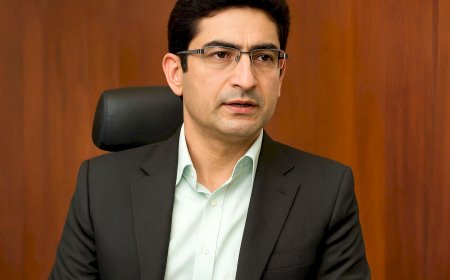
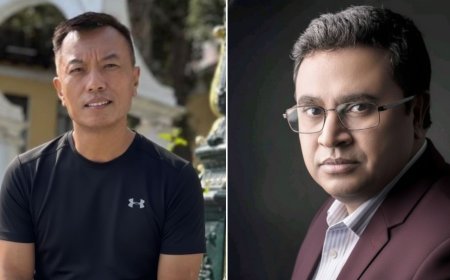
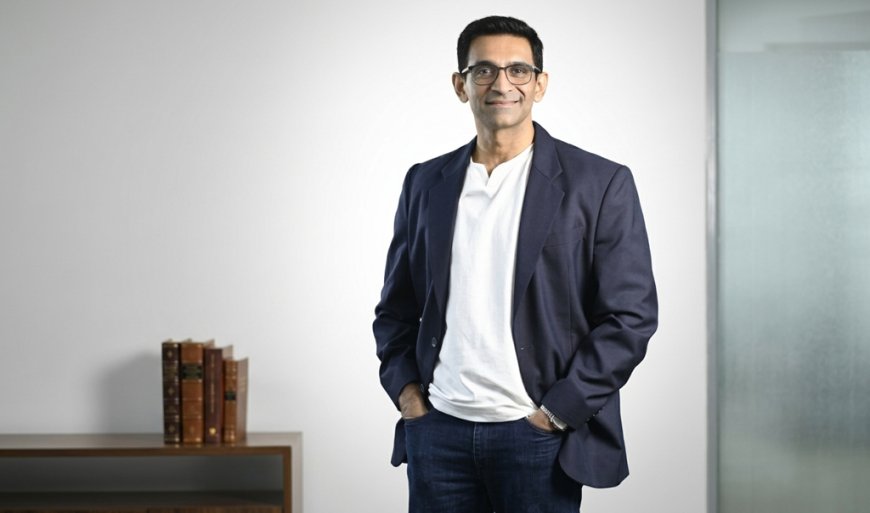
Kiran Mani, founding CEO of JioHotstar and head of JioStar's digital platforms, is set to join OpenAI as Managing Director for Asia Pacific, effective June 2026. Based out of Singapore, Mani will report directly to OpenAI's Chief Strategy Officer, Jason Kwon, and will lead regional strategy and operations across the entire APAC geography.
The development was confirmed internally at JioStar, with Vice Chairman Uday Shankar communicating the transition to employees. Mani will continue in his current role at JioStar — overseeing digital sports and entertainment platforms — until his departure in June, ensuring an orderly leadership transition for one of India's most significant streaming operations.
The appointment is a landmark hire for OpenAI as it accelerates its international expansion beyond Western markets. The company has established offices across APAC since 2025, with a presence in Tokyo, Singapore, Sydney, Seoul, and Mumbai. India ranks among OpenAI's largest markets globally by weekly active users, alongside Japan and Indonesia — making a senior, regionally experienced leader a strategic necessity, not just an organisational formality.
What This Means for Your Brand
Kiran Mani's move carries implications that extend far beyond the technology sector — and Indian brand leaders should pay close attention to what it signals.
First, it confirms that APAC is now OpenAI's most strategically contested territory. The appointment of a leader with Mani's profile — someone who built and scaled one of India's most complex digital ecosystems — suggests OpenAI is not approaching Asia Pacific as a secondary market. It is treating the region as a primary growth engine, requiring leadership that understands local market complexity, regulatory environments, and consumer behaviour at the deepest level.
For Indian enterprises and brands, this means OpenAI's enterprise push in India is about to become significantly more structured and aggressive. Expect more localised partnerships, India-specific product deployments, and accelerated conversations with large Indian corporations about integrating generative AI into core business operations.
For media and entertainment brands specifically, Mani's departure from JioStar raises a broader question: as AI capabilities grow, how will streaming platforms, content creators, and advertisers rethink their technology stacks? The executive who understood JioHotstar's digital architecture better than anyone is now sitting inside the company building the tools that will reshape content discovery, personalisation, and audience engagement globally.
The contrarian perspective: Mani's exit creates a leadership vacuum at JioStar at a critical moment — with IPL 2026 underway and the platform's multilingual and multi-feed strategy demanding sustained executive focus. How JioStar manages this transition will be closely watched.
Expert Take
Mani's professional background makes him an unusually well-suited candidate for this role. Before JioStar, he spent over thirteen years at Google, rising to General Manager for Android and Google Play across Asia Pacific and Japan — giving him direct experience scaling consumer technology platforms across the region's most diverse and complex markets. Earlier roles at Microsoft and IBM add enterprise technology depth to an already formidable profile.
OpenAI's competitive position in APAC is not assured. The company faces intense rivalry from Anthropic, Google DeepMind, and a growing field of regional AI players — particularly in markets like Japan and South Korea, where domestic AI development is well-funded and culturally embedded. In India, the AI adoption curve is steep but fast, with enterprise demand for AI-driven solutions accelerating across banking, healthcare, retail, and media.
Mani's mandate will likely centre on localisation, partnership development, and enterprise sales acceleration — precisely the areas where OpenAI's global product strengths need regional translation to convert into market dominance.
The brands.in Perspective
Let's state the obvious: OpenAI just hired one of India's most accomplished digital executives, and India should take that as both a compliment and a warning. A compliment because it confirms India's scale and strategic importance in the global AI race. A warning because it signals that OpenAI is moving from passive market presence to active market capture — with senior leadership, local infrastructure, and enterprise focus all converging simultaneously. For Indian brands still treating AI as a future consideration, Mani's appointment is a deadline. The global AI players are no longer waiting for India to come to them. They are coming to India — with intent, investment, and now, world-class local leadership.
Key Takeaways for Marketers
- OpenAI's APAC expansion is entering an aggressive new phase — Indian enterprises should expect more structured AI partnership conversations soon
- Senior talent migration from media/entertainment to AI signals where the next decade of digital value creation is being built
- India's AI market is now explicitly on OpenAI's priority list — weekly user volumes already rival Japan and Indonesia
- JioStar's leadership transition creates short-term uncertainty for India's largest streaming platform during a high-stakes broadcast season
- Generative AI adoption in Indian media, advertising, and content is moving from experimentation to strategic infrastructure — brands must accelerate readiness
FAQ
Q: Who is Kiran Mani and why does this appointment matter? Kiran Mani is the founding CEO of JioHotstar and head of JioStar's digital operations — one of India's most significant streaming leadership roles. His move to OpenAI as APAC Managing Director signals the company's serious commitment to building structured regional leadership across Asia's high-growth AI markets.
Q: What will Kiran Mani do at OpenAI? He will lead OpenAI's regional strategy and operations across the entire Asia Pacific geography, reporting to Chief Strategy Officer Jason Kwon, and will be based in Singapore. His focus is expected to include localisation, enterprise partnerships, and accelerating AI adoption across APAC markets.
Q: What happens to JioStar after Mani's departure? Mani will continue leading JioStar's digital platforms until June 2026, allowing time for leadership transition planning. However, his exit creates a notable vacancy at one of India's most complex and high-profile digital media organisations during a strategically important broadcast season.
Closing
Kiran Mani built the platform that streams cricket to half a billion Indians. Now he's going to help build the AI infrastructure that might one day personalise every frame of it. The question for every Indian brand and media leader reading this: when the people who understand your industry best start moving into AI — what does that tell you about where your strategy needs to go next?
Follow brands.in for daily brand intelligence, technology leadership insights, and sharp analysis of India's most consequential business moves.
What's Your Reaction?
 Like
0
Like
0
 Dislike
0
Dislike
0
 Love
0
Love
0
 Funny
0
Funny
0
 Angry
0
Angry
0
 Sad
0
Sad
0
 Wow
0
Wow
0