






























Royal Canin's New Film Is Rewriting Pet Nutrition Marketing
Royal Canin's new brand film reframes pet nutrition as precision science — and it's a masterclass in how pet care brands should market in India 2026.


Introduction
How many Indian pet parents are still picking food based on the brand they recognise from the store shelf? More than most of us in marketing would like to admit. Royal Canin's latest brand film, built around the idea that every pet has genuinely unique nutritional needs, challenges that habit head-on. In a category where most communication stops at "natural ingredients" and happy dogs running in slow motion, this campaign attempts something far more ambitious — it tries to make pet owners think differently about what feeding actually means. Here's why that matters, and what Indian brands can learn from it.
What Just Happened
Royal Canin has launched a new brand film centred on the theme "Unique Needs | Precise Nutrition" — a campaign that repositions the brand from pet food provider to long-term health partner for pets.
The film makes a clear argument: feeding a pet isn't a simple task, and a single formula cannot serve every animal equally. Factors including breed, size, age, lifestyle, and individual health conditions all shape what a pet actually needs nutritionally. The campaign brings these ideas to life visually, walking pet owners through how targeted nutrition supports specific health outcomes — digestive function, immune strength, skin and coat quality, and overall vitality.
What distinguishes this film is its attention to product design details that most pet food marketing ignores entirely. Kibble shape, texture, and nutrient composition aren't afterthoughts in Royal Canin's formulation process — and the campaign makes that point explicitly, framing it as science rather than salesmanship.
The initiative is backed by research developed in collaboration with veterinary and pet care professionals, reinforcing a credibility layer that generic pet food advertising rarely attempts.
What This Means for Your Brand
The Indian pet care market is growing fast, and Royal Canin's campaign reflects something important about where the category is heading — and where most brands are still stuck.
Pet ownership in urban India has accelerated significantly over the past five years. First-time pet parents, in particular, are younger, more digitally connected, and significantly more willing to research what they feed their animals than previous generations. They consult veterinarians, follow pet care influencers on Instagram, and read ingredient labels. Royal Canin's decision to lead with science and specificity rather than emotion and aspiration is a direct response to this shift.
For competing brands in the pet nutrition space, the challenge this campaign poses is real. When a market leader starts educating consumers about precision nutrition, it raises the bar for every brand in the aisle. A pet owner who understands why kibble shape matters for a Labrador's jaw structure is no longer going to be converted by a generic "complete nutrition" claim on a rival pack.
The contrarian view worth holding: education-led marketing is a long game. It builds trust and loyalty, but it requires consistency across every consumer touchpoint — packaging, digital content, vet partnerships, and in-store communication all need to carry the same message coherently. A single brand film, however well-made, only opens the door.
The forward-looking opportunity here extends beyond pet food. Any brand operating in a category where consumers make decisions based on habit rather than knowledge — baby nutrition, supplements, skincare — can apply the same playbook: lead with science, simplify complexity, and position the brand as a guide rather than just a product.
Expert Take
The Indian pet care market is estimated to be among the fastest-growing consumer categories in Asia, with urban pet ownership rising sharply and premium pet food seeing strong year-on-year demand growth. The shift from commodity pet food to veterinarian-recommended, breed-specific, or health-condition-specific products is well underway — and it mirrors patterns seen in mature Western markets roughly a decade ago.
What's particularly notable about Royal Canin's approach is its focus on simplifying rather than overwhelming. Pet nutrition science is genuinely complex. Most brands either dumb it down to the point of meaninglessness or lean so heavily into technical language that they lose the average pet parent entirely. A campaign that finds the middle ground — credible enough to earn trust, accessible enough to change behaviour — is harder to execute than it looks.
The education angle also has strong retention implications. A pet parent who learns to think about nutrition through Royal Canin's lens is far more likely to remain brand-loyal through life-stage changes in their pet's needs — puppy to adult, adult to senior, healthy to managing a specific condition.
The brands.in Perspective
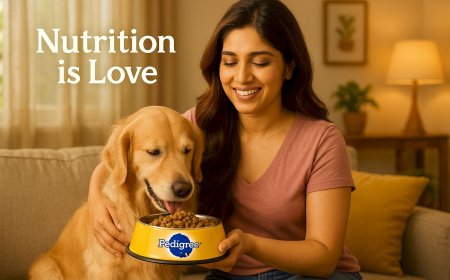
Most pet food advertising in India is still playing the emotional card — the pet is happy, the owner is happy, the family is complete. That formula worked when the category was young. It doesn't cut through anymore.
Royal Canin is betting that the next phase of this market belongs to the brand that makes pet parents feel informed, not just warmly reassured. That's a fundamentally different creative brief, and it demands fundamentally different content — not one brand film, but a full ecosystem of nutrition education, veterinary credibility, and community building.
The brands that follow this lead quickly will earn the trust of India's next generation of serious pet parents. The ones that keep running happy-dog-in-sunlight ads are already falling behind.
Key Takeaways for Marketers
- Precision over generalisation — breed, size, age, and health condition should drive pet nutrition messaging, not broad claims.
- Science-led marketing builds long-term brand loyalty — especially among younger, research-oriented Indian pet parents.
- Product design is an underused brand story — kibble shape and nutrient composition are genuinely differentiating if communicated well.
- Education is the new acquisition strategy in high-consideration consumer categories across India.
- One film isn't a campaign — sustained education across digital, vet channels, and packaging is what makes this positioning stick.
FAQ
Q: What is Royal Canin's "Unique Needs | Precise Nutrition" brand film about?
It's a campaign that positions pet nutrition as a science-driven, individualised approach rather than a one-size-fits-all solution. It highlights how breed, age, size, and health conditions determine what a pet genuinely needs nutritionally — and how Royal Canin's formulations respond to those specific factors.
Q: How is this campaign different from typical pet food advertising in India?
Most pet food marketing in India leads with emotion — happy pets, loving owners. Royal Canin's campaign leads with science and specificity, including product design details like kibble shape and nutrient composition. It's designed to educate pet parents rather than simply reassure them.
Q: What can other Indian brands learn from this campaign?
In any category where consumers make decisions based on habit rather than knowledge, education-led marketing creates a durable competitive advantage. The brand that teaches the consumer how to think about the category earns loyalty that a promotional discount never will.
Closing
Here's what we'd love to hear from you: Is your brand still selling on emotion when your consumer is ready to be sold on knowledge?
Follow brands.in for sharp, daily brand intelligence that keeps Indian marketers thinking sharper and moving faster. The best ideas in Indian marketing are happening right now — don't miss them.
What's Your Reaction?
 Like
0
Like
0
 Dislike
0
Dislike
0
 Love
0
Love
0
 Funny
0
Funny
0
 Angry
0
Angry
0
 Sad
0
Sad
0
 Wow
0
Wow
0