




















New I&B Secretary Chanchal Kumar Charts a Bold Digital Vision for Indian Media
New I&B Secretary Chanchal Kumar visits FTII, NFDC-NFAI and Doordarshan Pune. Here's what his digital media vision means for Indian brands and the content industry.

Introduction
Who shapes the future of India's film schools, national archives, and public broadcasting? The answer, increasingly, runs through the Ministry of Information and Broadcasting. Chanchal Kumar, the newly appointed Secretary of the I&B Ministry, has wasted no time making his presence felt. In his first official visit since assuming charge, Kumar toured three of Pune's most significant media institutions — FTII, NFDC-NFAI, and the Doordarshan Centre — signalling a clear shift in how the government intends to position India's media and entertainment infrastructure on the global stage. Here's what happened and why it matters.
What Just Happened
Chanchal Kumar, a 1992-batch IAS officer of the Bihar cadre, has been appointed as the new Secretary of the Ministry of Information and Broadcasting. He moves into this role from the Ministry of Development of North Eastern Region (DoNER), where he led complex governance and development programmes across the strategically important northeastern states. Outgoing I&B Secretary Sanjay Jaju, also a 1992-batch IAS officer, takes over Kumar's earlier responsibilities at DoNER — making it a direct leadership swap at the secretary level.
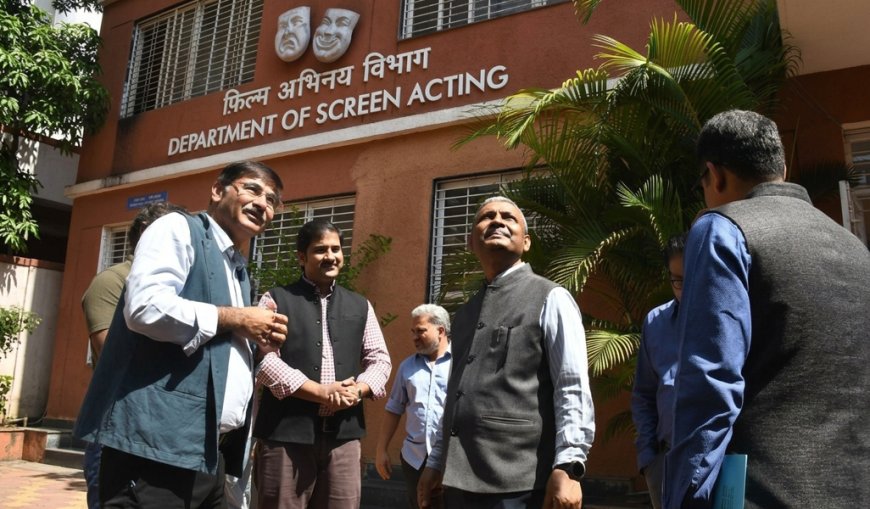
Kumar's first official visit took him to Pune, where he reviewed three premier media institutions. At the Film and Television Institute of India — recently elevated to university status — he inspected the new theatre complex, studios, and academic departments, stressing the need for entrepreneurship and modern skill development. At NFDC-NFAI, he assessed the ongoing Phase II digitisation work under the National Film Heritage Mission, reviewing film vaults and projection facilities. The visit concluded at Doordarshan Centre, Pune, where he engaged with officials on modernising content production and expanding audience reach.
He was accompanied by FTII Vice Chancellor Dhiraj Singh and NFDC Managing Director Prakash Magdum.
What This Means for Your Brand
For marketers, media planners, and content businesses operating in India, this leadership transition carries several meaningful implications.
First, Kumar's emphasis on digital media education at FTII signals that the government wants India's next generation of filmmakers and content creators to be globally competitive, not just technically trained. For brands investing in branded content, OTT collaborations, or regional storytelling, a more entrepreneurially oriented FTII could become a rich pipeline of innovative creative talent over the next five years.
Second, the accelerated digitisation of India's film archive under the National Film Heritage Mission has direct relevance for brands and agencies working with archival Indian content — whether for advertising, documentaries, or heritage campaigns. A better-preserved and more accessible national archive opens new creative possibilities.
Third, the Doordarshan modernisation push matters more than most marketers acknowledge. Doordarshan still reaches hundreds of millions of Indians in rural and semi-urban markets — audiences that premium OTT platforms have not fully captured. A modernised DD with stronger content and broader outreach could re-emerge as a viable media planning consideration for mass-market brands.
The contrarian view? Bureaucratic reshuffles rarely produce overnight transformation. The real test will be whether Kumar's policy intent translates into faster institutional reform or remains a well-intentioned review on paper.
Expert Take
India's media and entertainment sector is projected to reach approximately ₹3 trillion by 2026, driven by digital consumption, regional content growth, and increasing cross-platform integration. Against this backdrop, the I&B Ministry's role has evolved far beyond licensing and regulation — it is now a key architect of India's creative economy.
Kumar's background in multi-stakeholder coordination at DoNER is particularly relevant here. The I&B Ministry today must simultaneously manage relationships with legacy broadcasters, global OTT giants, digital news platforms, and film institutions — a coordination challenge that closely mirrors the inter-ministerial complexity Kumar has navigated previously. His appointment suggests the Centre is prioritising administrative agility and policy alignment over sector-specific media experience.
The brands.in Perspective
What makes this appointment genuinely interesting is the timing. India is in the middle of a content supercycle — regional films are crossing ₹1,000 crore, OTT platforms are competing fiercely for original IP, and public broadcasting is under pressure to stay relevant. Dropping a coordination-savvy administrator into the I&B Secretary role at this precise moment reflects a calculated bet by the Centre. The government doesn't just want a media regulator — it wants a builder. If Kumar can bring the same execution rigour to FTII, NFAI, and Doordarshan that he brought to northeastern infrastructure projects, brands.in believes Indian media institutions could see their most meaningful upgrade in a decade.
Key Takeaways for Marketers
- Chanchal Kumar appointed I&B Secretary; Sanjay Jaju moves to DoNER in direct swap
- Kumar's first visit covers FTII, NFDC-NFAI, and Doordarshan Centre in Pune
- FTII's new university status paired with entrepreneurship focus opens talent pipeline
- National Film Heritage Mission Phase II digitisation accelerates archival access
- Doordarshan modernisation could revive it as a mass-market media planning option
Frequently Asked Questions
Q: Who is Chanchal Kumar and what is his background? Chanchal Kumar is a 1992-batch IAS officer from the Bihar cadre, recently appointed as Secretary of the Ministry of Information and Broadcasting. He previously served as Secretary at the Ministry of Development of North Eastern Region and brings extensive multi-stakeholder governance experience to his new role.
Q: What is the significance of FTII getting university status? FTII's elevation to university status allows it to award degrees independently, attract broader academic collaborations, and expand its curriculum. For India's media and entertainment industry, it means a more credentialed and entrepreneurially trained pool of film and content professionals entering the workforce.
Q: What is the National Film Heritage Mission and why does it matter? The National Film Heritage Mission is a government initiative to digitise and preserve India's cinematic legacy. Phase II focuses on digitising older films and improving archival infrastructure at NFDC-NFAI. For content creators and brands, it expands access to rare archival Indian footage for creative and commercial use.
Closing
India's media institutions have long punched below their weight on the global stage. Could this be the leadership moment that changes that? With a new I&B Secretary signalling intent from day one, the next 12 months could be defining ones for FTII, Doordarshan, and India's broader creative economy. What do you think — is this the reform push Indian media has been waiting for? Drop your thoughts in the comments and follow brands.in for daily brand and media intelligence that keeps India's marketing community ahead of the curve.
What's Your Reaction?
 Like
0
Like
0
 Dislike
0
Dislike
0
 Love
0
Love
0
 Funny
0
Funny
0
 Angry
0
Angry
0
 Sad
0
Sad
0
 Wow
0
Wow
0