



























Government Appoints IOFS Officer Devinder Kumar as Prasar Bharati's CVO
Devinder Kumar appointed Chief Vigilance Officer of Prasar Bharati for three years. Here's what stronger public broadcaster governance means for Indian media and brands.

Introduction
Institutional credibility is the backbone of public media — and India's government is taking deliberate steps to reinforce it. The Centre has appointed senior Indian Ordnance Factories Service (IOFS) officer Devinder Kumar as the Chief Vigilance Officer of Prasar Bharati, the public broadcaster that operates Doordarshan and All India Radio. Cleared by the Department of Personnel and Training under the Ministry of Information and Broadcasting, this appointment signals a structured push toward stronger governance oversight at one of India's most far-reaching media institutions. For the broader media and brand ecosystem, this development deserves attention.
The Big Announcement
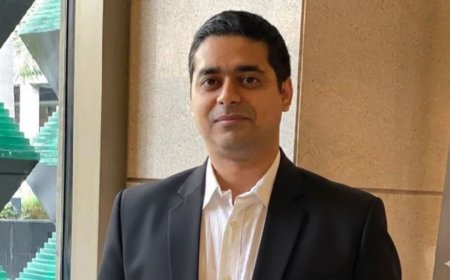
The central government has formally appointed Devinder Kumar, a senior IOFS officer, as Chief Vigilance Officer of Prasar Bharati. The appointment has been cleared by the Department of Personnel and Training and falls under the administrative jurisdiction of the Ministry of Information and Broadcasting.
Kumar will serve an initial tenure of three years, or until further orders, whichever comes earlier. In his new capacity, he will oversee vigilance administration across Prasar Bharati's extensive network — encompassing Doordarshan's national and regional television channels and All India Radio's vast broadcast infrastructure.
The appointment follows a formal recommendation by the Central Vigilance Commission, the apex government body responsible for vigilance oversight across central government organisations. The Department of Defence Production has been directed to relieve Kumar immediately to enable a smooth transition into his new responsibilities.
The CVO role is designated at Level-13 of the government Pay Matrix, carrying a salary range of ₹1,23,100 to ₹2,15,900.
What This Means for Your Brand
A CVO appointment at a public broadcaster may appear to be a purely administrative development — but its implications extend meaningfully into the media and marketing ecosystem.
1. Stronger governance signals greater institutional reliability. Prasar Bharati operates Doordarshan, which remains one of India's widest-reach television networks, particularly across rural and semi-urban markets. Brands advertising on DD channels or partnering with All India Radio benefit directly from a broadcaster that operates with transparent, accountable processes. Stronger vigilance oversight enhances the institutional credibility that underpins these commercial relationships.
2. Operational transparency affects content and partnership decisions. A well-functioning vigilance framework reduces procedural delays, curbs irregularities, and creates a more reliable environment for brands, production houses, and content partners engaging with Prasar Bharati. For agencies managing government-adjacent media mandates, this structural improvement matters.
3. Public media's role in brand reach is often underestimated. Doordarshan and All India Radio collectively reach hundreds of millions of Indians — audiences that many premium digital platforms simply cannot access. As governance at Prasar Bharati strengthens, the case for brands to explore public media as a complementary reach channel becomes increasingly compelling.
Expert Take
India's public broadcasting ecosystem is navigating a complex transition — balancing its traditional mandate of mass reach and public service communication with the demands of a rapidly digitising media landscape. Governance and institutional accountability are foundational to this transition succeeding.
Devinder Kumar's background in the Indian Ordnance Factories Service brings a process-driven, compliance-oriented approach to Prasar Bharati's vigilance function. The defence production ecosystem, known for its structured oversight frameworks and accountability mechanisms, is an unusual but arguably well-suited training ground for a CVO role at a large, multi-platform public institution like Prasar Bharati.
The Central Vigilance Commission's recommendation further lends credibility and institutional weight to this appointment.
The brands.in Perspective
Prasar Bharati rarely makes headlines in marketing circles — but it probably should more often. Doordarshan's reach into Bharat, not just urban India, remains unmatched by most private broadcasters and virtually all digital platforms. Yet the broadcaster has historically struggled with the kind of institutional credibility and operational efficiency that brand partners and advertisers demand. Kumar's appointment as CVO, backed by CVC recommendation and a three-year mandate, is a quiet but meaningful step toward building the governance foundation that Prasar Bharati needs to become a more commercially viable and trusted media partner. The potential is enormous — if the institution can match it with execution.
Key Takeaways for Marketers
- Devinder Kumar appointed Chief Vigilance Officer of Prasar Bharati for a three-year tenure
- Appointment cleared by DoPT under the Ministry of Information and Broadcasting
- Follows formal recommendation by the Central Vigilance Commission
- Role covers vigilance oversight across Doordarshan and All India Radio networks
- Strengthened governance at Prasar Bharati enhances its credibility as a brand and media partner
FAQ
Who is Devinder Kumar? Devinder Kumar is a senior Indian Ordnance Factories Service officer appointed as Chief Vigilance Officer of Prasar Bharati for an initial three-year tenure, following a Central Vigilance Commission recommendation.
What does a Chief Vigilance Officer do at Prasar Bharati? The CVO oversees vigilance administration, ensures operational transparency, and strengthens internal accountability mechanisms across Prasar Bharati's broadcasting network, which includes Doordarshan and All India Radio.
Why does this appointment matter for brands and media partners? Stronger governance at Prasar Bharati improves institutional reliability, reduces procedural irregularities, and creates a more transparent environment for brands, agencies, and content partners engaging with India's public broadcasting ecosystem.
Closing
India's public broadcaster reaches audiences that no private network or digital platform can fully replicate — but governance has long been its Achilles heel. With Devinder Kumar's appointment as CVO, Prasar Bharati takes a meaningful step toward the institutional credibility it needs to fulfil its potential. Is your brand overlooking public media as a reach channel in 2026? Tell us your thoughts in the comments and follow brands.in for daily intelligence on the media governance and marketing developments shaping India's broadcast landscape.
What's Your Reaction?
 Like
0
Like
0
 Dislike
0
Dislike
0
 Love
0
Love
0
 Funny
0
Funny
0
 Angry
0
Angry
0
 Sad
0
Sad
0
 Wow
0
Wow
0