



























Flipkart's Ugadi vs Yugadi Debate Is Brilliant Regional Marketing
Flipkart's Ugadi campaign by 22feet turns a regional pronunciation debate into a festive shopping moment. Here's what Indian brands can learn from it.

Introduction
What if the very thing that divides two communities could also bring them together — and drive sales? That's exactly the cultural tightrope Flipkart walked this Ugadi season, and it nailed the landing. As Indian brands increasingly compete for the hearts (and wallets) of regional audiences, hyper-local storytelling has moved from "nice to have" to "non-negotiable." Flipkart's latest campaign, conceptualised by 22feet Tribal Worldwide, shows how a pronunciation difference can become your most powerful marketing insight. Here's why this campaign deserves your full attention.
The Big Announcement
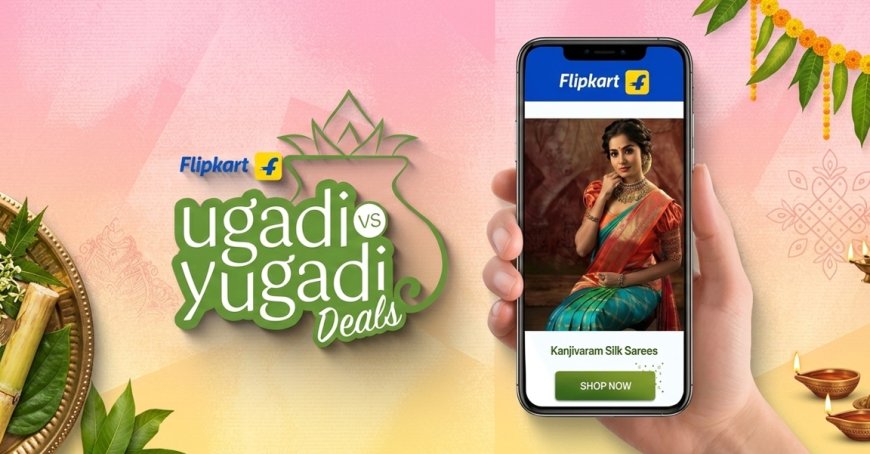
Flipkart launched a festive campaign around Ugadi — the harvest new year celebrated across Andhra Pradesh, Telangana, and Karnataka — built entirely on a single cultural tension: is it "Ugadi" or "Yugadi"?
The campaign film plays out a humorous exchange between Telugu and Kannada speakers, each convinced their pronunciation is correct. The debate resolves not with a winner, but with a shared outcome — shopping and celebration on Flipkart. The insight is elegant: the name differs, but the festival spirit is identical.
Beyond the film, 22feet built a microsite where users can enter festive wishes and unlock exclusive deals, turning a cultural debate into an interactive commerce experience. The campaign is amplified across Meta platforms, with additional integrations on the Flipkart app and website. It was conceptualised and executed by 22feet Tribal Worldwide, with Mothership Productions handling production and Karan Shetty directing the film.
What This Means for Your Brand
India is not one market. It is 28 states, dozens of languages, and hundreds of micro-cultures — each with its own festive calendar, linguistic quirks, and consumer behaviour. Flipkart's Ugadi campaign is a masterclass in treating this complexity as creative fuel rather than a logistical headache.
Consider the implications for your brand:
A food delivery brand running a Pongal campaign could use the same "same festival, different name" framework to unify Tamil Nadu and Sri Lankan Tamil audiences without erasing local identity.
A fashion label could map the same principle to wedding wear — "Is it a shaadi, a kalyanam, or a lagna? Whatever you call it, we've got the outfit" — and instantly become relevant across three language markets with one campaign.
The contrarian view worth considering: brands that get this wrong can look patronising or tokenistic. Regional campaigns built on surface-level clichés — the dhol, the diyas, the stock photo of a joint family — do more damage than good. The Flipkart campaign works because the insight is genuinely specific and the humour is earned, not manufactured.
The interactive microsite layer is also worth noting. It moves the campaign from passive awareness to active engagement, creating a direct pipeline from cultural resonance to conversion.
The Numbers Behind the News
India's festive season consistently drives a disproportionate share of annual e-commerce revenue. According to industry data, festive season sales events in India have grown by over 20% year-on-year in recent cycles, with Tier 2 and Tier 3 cities accounting for a growing share of that spending.
South India — the primary geography targeted by this Ugadi campaign — is among the fastest-growing e-commerce markets in the country, with high smartphone penetration and a strong preference for vernacular content. Brands that communicate in the cultural language of these audiences, not just the literal language, consistently outperform those running generic national campaigns.
Vishnu Srivatsav, Chief Creative Excellence Officer at 22feet, framed the intent clearly: "Small details make for big cultural differences. We felt that the pronunciation nuance was a great starting point, and we added healthy doses of exaggeration and absurdity."
That formula — specific cultural truth plus exaggerated humour — is increasingly the signature of campaigns that break through in fragmented digital feeds.
The brands.in Perspective
Most brands treat regional India as a translation problem. Flipkart and 22feet treated it as a storytelling opportunity — and there's a huge difference. The Ugadi-Yugadi insight didn't require a massive budget or a celebrity. It required someone in the room who actually knew the culture well enough to find the friction worth dramatising. That's the real lesson here. India's most powerful brand moments in the next decade won't come from pan-India TV spots. They'll come from brands willing to get specific, get local, and occasionally get a little absurd about it.
Key Takeaways for Marketers
- Regional campaigns win when they're built on genuine cultural specificity, not stereotypes.
- The "same festival, different name" framework is replicable across dozens of Indian occasions.
- Interactive microsites can extend a brand film into a direct commerce touchpoint.
- Humour rooted in real cultural tension lands harder than manufactured festivity.
- South India's e-commerce growth makes regional investment a business decision, not just a brand one.
FAQ
Q: Why did Flipkart focus on the pronunciation debate specifically? A: The Ugadi vs Yugadi debate is a genuine, widely known cultural quirk in South India. Using it as a creative hook made the campaign feel locally authentic rather than like a generic festive ad. It gave audiences something to smile about and share.
Q: Can smaller brands replicate this kind of regional campaign without large agency budgets? A: Absolutely. The principle — find a hyper-local cultural truth and dramatise it — doesn't require a big production. A well-written social post or a regional-language Reel built on the same insight can achieve strong engagement at a fraction of the cost.
Q: What is the microsite's role in the campaign? A: The microsite allows users to enter festive wishes and access exclusive deals, creating a two-way interaction. It transforms passive viewers into active participants, bridging content engagement with e-commerce intent.
Closing CTA
Does your brand have a festive campaign this season that digs this deep into regional culture — or are you still defaulting to the same diyas and smiling family template? Tell us in the comments, and follow brands.in for daily brand intelligence that actually makes you think differently.
What's Your Reaction?
 Like
0
Like
0
 Dislike
0
Dislike
0
 Love
0
Love
0
 Funny
0
Funny
0
 Angry
0
Angry
0
 Sad
0
Sad
0
 Wow
0
Wow
0