

























IPL Franchise Valuations: From Hundreds of Crores to Billions — Who Really Built This Empire?
IPL franchise valuations have surged 25x since 2008 — RCB and Rajasthan Royals sold for billions in 2026. Here's what the numbers mean for Indian brands and investors.

Introduction
What turns a cricket tournament into a billion-dollar empire? Not one decision, not one person — but a sequence of bold bets, market forces, and collective execution stretched across nearly two decades. The Indian Premier League's franchise valuation surge has recently sparked a fresh wave of conversation, with original founder Lalit Modi disclosing the 2008 auction bids and pointing to value appreciation far beyond what most media estimates suggest. At the same time, recent ownership changes at Royal Challengers Bengaluru and Rajasthan Royals have put hard numbers on what was once speculative. The story that emerges is as much about architecture as it is about ambition — and it belongs to many.
The Big Announcement
Lalit Modi recently shared details of the IPL's inaugural franchise auction held on January 24, 2008, in Mumbai, offering rare transparency into the financial origins of the league. According to Modi, franchise bids at the time ranged between approximately $67 million and $112 million, converted at an exchange rate of roughly ₹40 per dollar. Crucially, these payments were structured over ten years — significantly reducing upfront financial burden and allowing franchises to benefit from IPL revenues almost immediately.
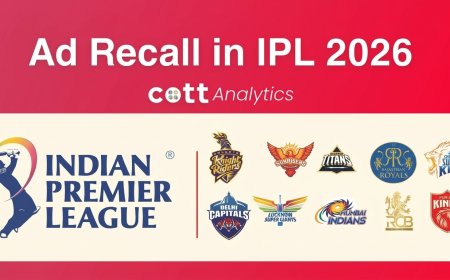
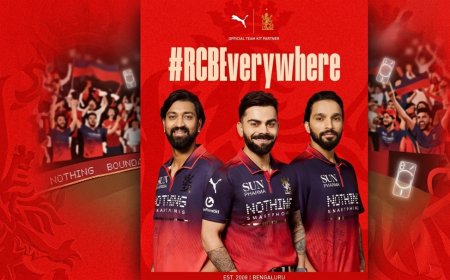
Fast forward to March 2026, and the numbers tell a dramatically different story. Royal Challengers Bengaluru was acquired by a consortium led by the Aditya Birla Group, alongside Times Internet, Bolt Ventures, and Blackstone, for approximately ₹16,000 crore — roughly $1.78 billion. Meanwhile, Rajasthan Royals changed hands to a US-based consortium headed by tech entrepreneur Kal Somani for an estimated ₹15,000–16,000 crore, representing nearly a 25-fold increase in franchise value since 2008.
As Modi noted, the true value appreciation is far greater than conventional media estimates suggest — and company filings with the Registrar of Companies can verify the original acquisition costs for accuracy.
What This Means for Your Brand
For Indian brands, marketers, and investors, the IPL valuation surge carries implications well beyond cricket.
1. IPL franchises are now year-round content and commerce platforms. The days of treating an IPL team as a seasonal advertising vehicle are over. Franchises like RCB and Rajasthan Royals generate revenue through sponsorships, merchandise, digital content, fan engagement platforms, and international licensing — creating touchpoints that extend far beyond the 60-odd days of match play. Brands that build deep franchise partnerships are buying into a 365-day audience relationship.
2. Global capital is validating Indian sports as a premium asset class. The involvement of Blackstone, David Blitzer's Bolt Ventures, and US-based tech investors in IPL franchise deals signals something important: international institutional money now sees Indian cricket as comparable to top global sports properties. For Indian conglomerates and family offices evaluating sports investments, this external validation changes the risk calculus significantly.
3. The media rights multiplier effect is real. A significant driver of franchise value appreciation has been the exponential growth in broadcasting and digital rights revenues. Each new media rights cycle has added a fresh layer of commercial value to every franchise on the grid — regardless of on-field performance. Brands and media buyers tracking where premium audiences migrate should follow the IPL rights money closely.
The forward-looking reality: as the IPL enters its third decade and explores international expansion, franchise valuations are unlikely to plateau anytime soon.
The Numbers Behind the News
The scale of appreciation is staggering when viewed in context. A franchise acquired in 2008 for the equivalent of roughly ₹2,700–4,500 crore — spread over a decade — is now valued at ₹15,000 crore and above. That represents a return profile that rivals top-performing private equity funds over the same period.
Several factors have driven this compounding growth. The IPL's broadcasting and digital rights deals now fetch billions of dollars annually, with both domestic and international streaming platforms competing aggressively for rights. Sponsorship revenues have scaled in parallel, with title sponsorships, on-kit deals, and digital integrations all commanding premium rates.
Analysts also point to the league's expanding demographic reach — younger, digitally native fans consuming IPL content across YouTube, OTT platforms, and social media — as a structural driver of long-term value. For global private equity firms evaluating sports assets, the IPL's combination of a massive captive audience, strong media rights infrastructure, and growing international interest makes it one of the most compelling sporting investments available anywhere in the world.
The brands.in Perspective
The debate over who deserves credit for the IPL's success is fascinating — but ultimately secondary to the more important question: what does this mean going forward? Lalit Modi's foundational vision, the BCCI's institutional muscle, franchise owners' commercial acumen, broadcasters' distribution reach, and millions of fans' passionate engagement all contributed chapters to this story. No single author owns it. What Indian brands should take from this moment is simpler and more actionable: the IPL is no longer just a cricket property. It is one of India's most powerful commercial platforms — and the brands that treat it that way will extract far more value than those still thinking in terms of jersey logos and 30-second ad spots.
Key Takeaways for Marketers
- IPL franchise values have surged nearly 25x since the 2008 inaugural auction
- RCB sold for approximately ₹16,000 crore to an Aditya Birla-led consortium in 2026
- Rajasthan Royals changed hands for ₹15,000–16,000 crore to a US-based group
- Original 2008 bids were structured over 10 years — many teams turned profitable in year one
- Global PE firms and conglomerates are now treating IPL franchises as premium media assets
- Franchise value is driven by media rights, sponsorships, merchandise, and digital content — not just cricket
FAQ
What were the original IPL franchise bid amounts in 2008? According to Lalit Modi, bids ranged between approximately $67 million and $112 million, converted at ₹40 per dollar. Payments were structured over ten years, easing the financial burden on early franchise owners.
Why have IPL franchise valuations grown so dramatically? A combination of surging media rights revenues, growing global investor interest, expanding digital audiences, and franchise evolution into year-round content platforms has driven exponential value appreciation over nearly two decades.
Who bought Royal Challengers Bengaluru in 2026? RCB was acquired by a consortium including the Aditya Birla Group, Times Internet, Bolt Ventures led by David Blitzer, and Blackstone — for approximately ₹16,000 crore.
Let's Talk
The IPL's valuation story is far from over — if anything, it's just entering its most globally ambitious chapter. Do you think Indian brands are fully capitalising on what IPL franchises now represent as commercial platforms? Or are most still stuck in match-day thinking? Share your perspective below and follow brands.in for daily intelligence on India's most powerful brand ecosystems.
What's Your Reaction?
 Like
0
Like
0
 Dislike
0
Dislike
0
 Love
0
Love
0
 Funny
0
Funny
0
 Angry
0
Angry
0
 Sad
0
Sad
0
 Wow
0
Wow
0