






















Micro-dramas are rewriting india's feed-first marketing playbook
Meta and ormax media's new report reveals 89% of india's micro-drama viewers discover content through social feeds. Here is what it means for indian brand strategy.


Introduction
What if the most powerful advertising real estate in india right now is not a prime-time television slot or a homepage takeover — but a three-minute episodic story in someone's social feed at 10pm? That is the reality micro-dramas are creating for indian marketers. A new report from Meta, developed in collaboration with ormax media, has put hard numbers behind a format that has been quietly building momentum. The findings are striking — and for brands still treating short-form video as an afterthought, they should serve as a wake-up call.
What just happened
Meta, in partnership with media insights firm ormax media, has released a comprehensive audience research report titled "micro dramas: the india story." The findings were unveiled at Meta's inaugural marketing summit focused entirely on the micro-drama category — bringing together platforms, creators, brands, agencies, and investors under one roof.
The report is one of the most detailed studies of the micro-drama category in india to date. It was conducted between november 2025 and january 2026, combining depth interviews and close to 2,000 personal interviews with viewers aged 18 to 44 across 14 states.
The headline finding is hard to ignore. Nearly 89% of viewers discover micro-dramas through social feeds rather than through active search. A further 65% of current viewers say they encountered the format for the first time within the last year — underlining just how rapidly audience habits are forming around this new content category.
Unlike traditional OTT content, micro-dramas are built around short, episodic narratives designed specifically for smartphone consumption. Audiences do not go looking for them. The algorithm brings the story to them.
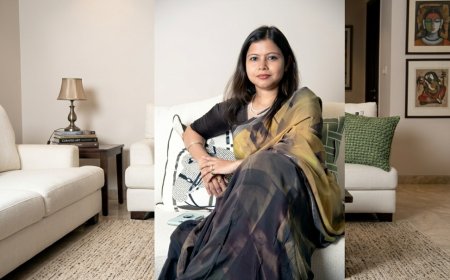
Shweta bajpai, director of media and entertainment at Meta india, described micro-drama as a format that is rewriting the rules of indian entertainment — one where the discovery engine is social, not search.
The numbers behind the news
The data portrait of a micro-drama viewer is revealing. Audiences spend a median of 3.5 hours per week watching micro-dramas, typically spread across seven to eight short sessions rather than extended viewing windows. Consumption peaks between 8pm and midnight, with additional spikes during commutes and work breaks — confirming that the format is built for life's in-between moments.
Perhaps the most commercially significant finding is the solo viewing dynamic. Around 90% of micro-drama consumption happens alone, compared with 43% for long-form OTT content. This is not just a behavioural curiosity — it is a targeting opportunity. Personal-screen, solo viewing creates the conditions for more intimate, context-aware brand storytelling that simply does not exist in shared viewing environments.
Viewing behaviour also splits into two distinct modes. Roughly 43% of viewers watch with full attention, while 57% consume content in ambient mode — multitasking while the story plays. For brands, this dual behaviour requires creative that hooks instantly while sustaining engagement across the full episode.
Genre preferences offer further cues. Romance leads at 72%, followed by family drama at 64% and comedy at 63%. Familiar faces and recognisable casting drive content sampling for 56% of viewers — making creator-led brand integrations a natural fit for the format.
On the monetisation side, the picture is more complex. Only 28% of viewers have ever paid for micro-drama content, and just 17% currently hold an active subscription. Around 53% of users report anxiety around auto-renewals, while 32% prefer a per-episode payment model. The median preferred price point sits at approximately 75 rupees per month — signalling that the freemium-to-paid conversion challenge remains real for platforms.
One bright spot is the openness to new formats. Nearly 47% of viewers describe AI-generated micro-dramas as unique and creative, with only 6% saying they would avoid such content entirely. For brands experimenting with AI-led creative production, this is an encouraging signal.
Platform-level growth reinforces the macro trend. Story TV, one of the prominent players in the space, crossed five crore downloads within six months. The category is seeing user base growth of 70 to 80 percent year-on-year across multiple platforms, according to Meta's shweta bajpai — and content produced in india is now travelling to markets including the US and UK, making this an emerging india-for-the-world story.
The brands.in perspective
Here is the uncomfortable truth for indian marketers: most brand creative is still being built for a viewing context that no longer describes how the majority of digital audiences actually consume content. Repurposed television commercials dropped into a social feed are not a strategy — they are a missed opportunity. Micro-dramas are not asking brands to make shorter ads. They are asking brands to become part of the story. The format rewards native integration, character-led brand moments, and episodic recall over one-time impressions. The brands that figure this out early — embedding themselves into feed-first narratives with the same craft they once reserved for television — will own a disproportionate share of attention in the next phase of indian digital entertainment. The window to move first is still open. But it will not stay open for long.
Key takeaways for marketers
- Nearly 89% of micro-drama viewers discover content through social feeds, not search.
- 65% of viewers discovered the format within the last year — growth is accelerating fast.
- Solo viewing at 90% creates a powerful personal-screen targeting opportunity for brands.
- Romance, family drama, and comedy dominate — align brand tone to genre context.
- Episodic brand integrations and cliffhanger storytelling outperform standard ad formats.
- Monetisation remains a challenge — only 17% of viewers hold an active subscription.
Faq section
Q: What are micro-dramas and why are they growing in india? Micro-dramas are short, episodic stories designed for smartphone consumption, typically discovered through social feeds rather than active search. Their rapid growth in india is driven by mobile-first viewing habits, algorithm-led discovery, and the format's ability to fit into small pockets of daily time.
Q: How should indian brands approach micro-drama advertising? Brands should move away from repurposed television or digital creatives and invest in native, feed-first storytelling. Formats that perform best include short episodic integrations, character-led brand moments, and cliffhanger-style narratives that blend naturally into the content rather than interrupting it.
Q: What does the meta-ormax micro-drama report reveal about viewer behaviour? The report finds that viewers spend around 3.5 hours weekly on micro-dramas across multiple short sessions. Around 90% watch alone, consumption peaks between 8pm and midnight, and 57% watch in ambient or multitasking mode — all of which shape how brands should build and sequence their creative.
Closing cta
The feed is no longer just a distribution channel — it is a storytelling canvas. Is your brand building for it or still broadcasting at it? Share your perspective in the comments below, and follow brands.in for daily intelligence on where indian marketing is heading next.
What's Your Reaction?
 Like
0
Like
0
 Dislike
0
Dislike
0
 Love
0
Love
0
 Funny
0
Funny
0
 Angry
0
Angry
0
 Sad
0
Sad
0
 Wow
0
Wow
0