


























India's Consumption Is No Longer One-Size-Fits-All: MRSI Decodes the New Growth Reality
MRSI webinar reveals India's consumption shift — rural volume growth, urban premiumisation, and why region-specific brand strategies are now essential for Indian marketers.


Introduction
What if the next hundred million consumers your brand needs to reach aren't in Mumbai or Delhi — but in Tier 3 towns and villages you've barely mapped? India's consumption story is being rewritten, and the old metro-first playbook is losing its edge fast. At a recent MRSI webinar titled Urban Wealth, Rural Volume, and What's Next: The Great Indian Consumption Shift, three industry experts unpacked a consumption landscape that is more fragmented, more regional, and more income-driven than ever before. Here's what every Indian marketer needs to hear.
The Big Announcement
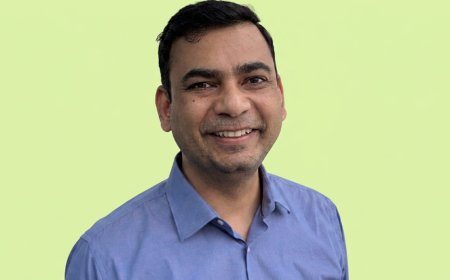
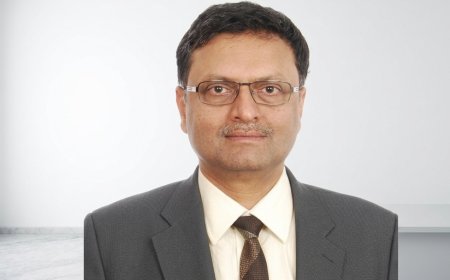
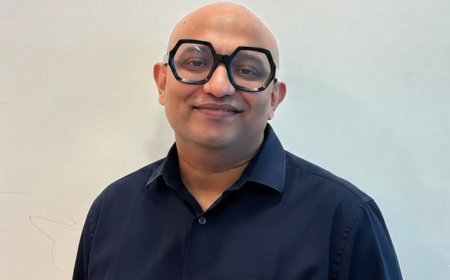
The Market Research Society of India (MRSI) hosted a webinar bringing together Sharang Pant, Customer Success Lead at NielsenIQ India; P.S. Pradeep, Advanced Analytics Director at Worldpanel by Numerator; and Manish Makhijani, CEO of RSPL Ltd's Hygiene Care Business. Moderated by Abhinav Goel, the session delivered a comprehensive diagnosis of how India's consumption model is shifting.
The central finding: growth is no longer uniform. Rural and smaller town markets are outpacing metros in volume terms, while urban India is driving premiumisation. FMCG growth in smaller geographies is volume-led, while metros are seeing price-led momentum. Meanwhile, categories like tech durables, personal care, and snacking are expanding their footprint well beyond city limits. The message was clear — regional nuance is no longer optional for brands. It's the core strategy.
What This Means for Your Brand
This isn't just a market research insight — it's a strategic inflection point. Here's what it means in practice:
First, rural India is not a homogeneous low-income bloc. A significant share of higher-income households exists beyond metro boundaries. Brands that continue to treat rural as a price-sensitive afterthought risk losing a fast-growing, aspirational consumer base.
Second, pack architecture matters more than ever. Rural consumers are accessing premium categories — but through smaller pack sizes. If your brand doesn't offer an entry-level SKU that fits a rural wallet without compromising quality perception, a competitor will fill that gap.
Third, unbranded products are actually gaining ground in urban markets, while listed brands are holding stronger in rural areas due to better distribution and familiarity. This is a counterintuitive signal: urban consumers are experimenting with unbranded alternatives, while rural consumers are demonstrating brand loyalty where access and trust exist. Marketers need to rethink where to defend brand equity and where to build it from scratch.
The forward-looking take: as incomes rise across non-metro India, the consumption ladder will be climbed from both ends — mass and premium — leaving the mid-segment increasingly squeezed.
Expert Take
The data presented at the MRSI session pointed to a clear divergence in coping behaviours between rural and urban consumers. While per-household spend growth is broadly similar across both markets, how consumers manage that spend is starkly different. Urban shoppers are consolidating trips and becoming more planned and deliberate. Rural shoppers, by contrast, are spreading purchases across more, often smaller packs — maximising access without stretching budgets.
Makhijani added a grounded perspective from the brand-building side: rural consumers are not different people — they operate in a different context. Infrastructure improvements like road connectivity, rural electrification, UPI adoption, and rising internet penetration are actively reshaping what rural India can access and afford. Distribution innovation — micro-distribution networks, rural influencer programmes, direct-to-retailer systems — is becoming as important as the product itself in unlocking these markets.
The brands.in Perspective
The MRSI webinar essentially issued a challenge to Indian marketers: stop building for the average Indian consumer, because that consumer doesn't exist anymore. The gap between a metro household trading up to imported skincare and a rural household buying its first branded shampoo sachet is not a problem to solve — it's two separate, equally real opportunities. Brands that chase one at the expense of the other will find themselves outflanked. The winners will be those who build regional intelligence, vernacular communication, and flexible pricing architecture into their core strategy — not as an add-on, but as the foundation.
Key Takeaways for Marketers
- Rural markets are growing faster in FMCG volume than metros
- Premium categories are entering rural India via smaller pack sizes
- Urban consumers are consolidating trips; rural consumers are diversifying purchases
- Unbranded products are gaining urban ground — protect brand equity proactively
- Hyperlocal, vernacular marketing is no longer niche; it's necessary
- Distribution innovation is as critical as product innovation in non-metro markets
FAQ
Q: Why is rural India growing faster in FMCG volumes than urban markets? Rural growth is driven by expanding access — through e-commerce, organised retail, and better infrastructure — combined with rising incomes and increased adoption of categories like personal care and snacking that were previously underpenetrated.
Q: Does premiumisation only apply to urban consumers? No. Rural consumers are increasingly accessing premium products, primarily through smaller, more affordable pack sizes. The mass and premium ends are both growing; it's the mid-segment that is under pressure.
Q: What should brands prioritise to win in non-metro India? Brands need region-specific strategies covering hyperlocal distribution, vernacular communication, appropriately sized SKUs, and community-led marketing. A single national campaign is unlikely to be sufficient on its own.
Closing
India's consumption map is being redrawn — not from the top down, but from every corner simultaneously. The brands that invest in understanding regional realities today will be the category leaders of tomorrow. Are you still marketing to one India, or have you started building for many? Follow brands.in for daily intelligence on the trends, campaigns, and strategies shaping Indian marketing.
What's Your Reaction?
 Like
0
Like
0
 Dislike
0
Dislike
0
 Love
0
Love
0
 Funny
0
Funny
0
 Angry
0
Angry
0
 Sad
0
Sad
0
 Wow
0
Wow
0