























SLOVIC's 'Gym Ghar Lao': Tiger Shroff Brings the Fitness Revolution Home
SLOVIC appoints Tiger Shroff as brand ambassador and launches 'Gym Ghar Lao' campaign, targeting India's 99% without gym access. Here's the marketing strategy behind it.

Introduction
What if the biggest growth opportunity in India's fitness industry is not building more gyms — but making them irrelevant? While premium fitness chains battle for space in metro malls and monthly memberships remain out of reach for most Indian households, a quieter revolution is taking shape in living rooms, terraces, and spare bedrooms across the country. SLOVIC, an Indian fitness gear brand, has just made its most ambitious move yet — and the combination of Tiger Shroff, a ₹500 entry point, and a campaign called 'Gym Ghar Lao' might be exactly the disruption this category needs.
What Just Happened
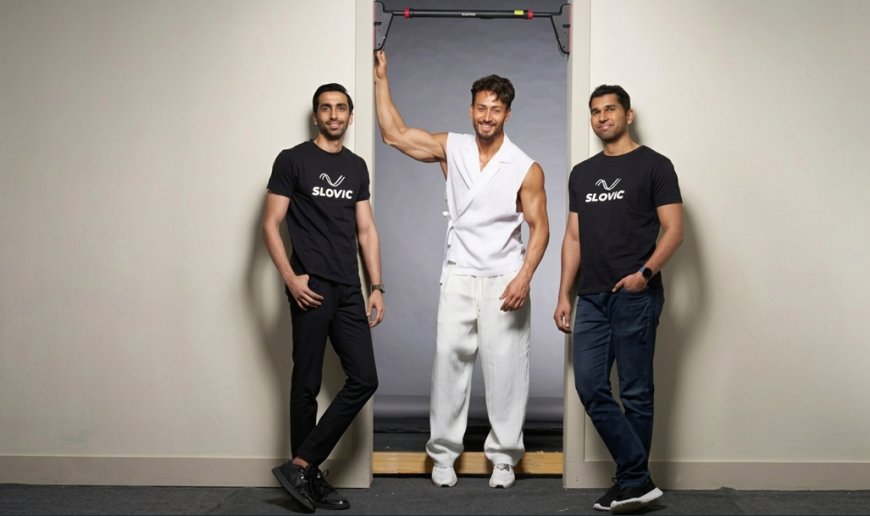
SLOVIC has officially appointed actor and fitness icon Tiger Shroff as its brand ambassador, simultaneously launching a campaign titled 'Gym Ghar Lao' — a direct, culturally resonant call to bring the gym experience into Indian homes.
The campaign positions home-based fitness as a practical, affordable, and sustainable alternative to traditional gym memberships. SLOVIC's product portfolio supporting the campaign includes pull-up bars, resistance bands, dumbbells, adjustable dumbbells, and yoga mats — equipment designed to deliver a functional workout without requiring a dedicated fitness facility.
The strategic context behind the campaign is grounded in compelling data. According to the World Health Organization, 49.4% of adults in India were insufficiently physically active in 2022 — nearly half the country's adult population falling short of basic activity benchmarks. A joint report by Deloitte India and the Health and Fitness Association places fitness facility membership penetration in India at just 0.8% in 2024, with the majority of gym revenue concentrated in top metro cities.
SLOVIC is designed to serve the vast consumer base that traditional fitness infrastructure has consistently failed to reach — beginners, young adults, working professionals, and older individuals seeking accessible strength and mobility solutions. Products are available across Amazon, Flipkart, Blinkit, Zepto, and Instamart, placing fitness equipment within the same convenience ecosystem as everyday household purchases.
The campaign will roll out across digital platforms, supported by films and content built around themes of convenience, accessibility, and the freedom to train anywhere, at any time.
What This Means for Your Brand
The SLOVIC–Tiger Shroff partnership is a masterclass in matching brand ambassador to brand mission — and it carries significant implications for how Indian consumer brands should think about fitness, accessibility, and the democratisation of aspiration.
Tiger Shroff is arguably the most physically credible celebrity in Indian popular culture. His association with fitness is not a brand construct — it is genuinely central to his public identity. For a fitness equipment brand attempting to build credibility in a category where consumer trust is built on visible results, this authenticity premium is invaluable.
But the more strategically interesting dimension of this campaign is the price point narrative. SLOVIC's co-founder Aqib Mohammed highlighted that the brand's entry-level products start at approximately ₹500 — a figure deliberately chosen to signal that beginning a fitness journey requires no significant financial commitment. This framing transforms SLOVIC from a product brand into a democratisation movement, positioning fitness as a right rather than a privilege.
For Indian brands across categories, this is an instructive approach to market expansion. The addressable market for gym memberships in India is structurally limited by infrastructure, geography, and affordability. The addressable market for home fitness equipment, delivered via quick commerce at accessible price points, is orders of magnitude larger. SLOVIC is not competing with gyms — it is building an entirely new category occasion.
The contrarian consideration: can Tiger Shroff, whose physique represents years of elite professional training, credibly represent a brand targeting fitness beginners? The campaign's success will depend on whether its creative execution bridges that gap — showing Tiger at the starting line, not just the finish.
Expert Take
The founding team behind SLOVIC has articulated a philosophy that goes beyond product sales into genuine category thinking.
Aqib Mohammed, Co-Founder, framed the brand's larger opportunity as rethinking how fitness fits into Indian lives — not merely selling equipment. His emphasis on the ₹500 entry point as a tool for making fitness democratic, practical, and consistent reflects an understanding that behaviour change requires removing financial friction before addressing motivational friction.
Shashwat Diesh, Co-Founder, extended this thinking further — identifying cost, convenience, and access as the three friction points SLOVIC is systematically designed to eliminate. The addition of Tiger Shroff as brand ambassador, in his view, allows the brand to amplify a deeply practical message in a way that is simultaneously aspirational and relatable.
The WHO and Deloitte data points anchoring this campaign are not incidental. They position SLOVIC within a public health narrative — framing home fitness not as a lifestyle choice for the already-converted, but as a necessary intervention for a population whose activity levels represent a growing concern. That narrative gives the brand purpose beyond commerce, which in today's consumer environment is a significant competitive advantage.
The brands.in Perspective
SLOVIC's 'Gym Ghar Lao' campaign is one of the more intellectually honest pieces of brand positioning to emerge from India's fitness category in recent memory. It does not pretend that its consumer already has a gym habit — it starts from the reality that most Indians have never owned a piece of fitness equipment in their lives, and builds an accessible, judgement-free on-ramp from that truth. Tiger Shroff as the face of this message is a bold creative choice. If the campaign executes on the promise of relatability rather than just aspiration, SLOVIC has a genuine opportunity to own the home fitness category in India before the competition realises how large it is becoming.
Key Takeaways for Marketers
- India's gym penetration stands at just 0.8% — home fitness represents a structurally underserved, massive market opportunity
- A ₹500 entry point transforms fitness equipment from a considered purchase into an impulse category on quick commerce
- Tiger Shroff's authentic fitness credibility provides a trust foundation that most celebrity endorsements cannot replicate
- Quick commerce availability on Blinkit, Zepto, and Instamart creates a powerful new distribution channel for fitness brands
- Democratisation narratives — fitness for everyone, not just the already-fit — are increasingly resonant with India's aspirational middle market
FAQ
What is SLOVIC's 'Gym Ghar Lao' campaign about? The campaign promotes home-based fitness as a practical and affordable alternative to traditional gym memberships, positioning SLOVIC's equipment range — from resistance bands to dumbbells — as everything needed to build an effective workout routine at home, starting at around ₹500.
Why is Tiger Shroff the right ambassador for SLOVIC? Tiger Shroff's identity is inseparable from fitness in Indian popular culture, giving SLOVIC immediate credibility in a category built on physical results. His cross-demographic appeal — spanning teenagers, young professionals, and fitness aspirants — also aligns with SLOVIC's age and gender-inclusive brand positioning.
Where can consumers buy SLOVIC products? SLOVIC products are available across major e-commerce and quick commerce platforms including Amazon, Flipkart, Blinkit, Zepto, and Instamart — ensuring convenient access for consumers across urban and semi-urban India.
Closing
Is your brand addressing the consumers that existing infrastructure has failed to serve — or competing for the same small slice of already-converted customers? SLOVIC's bet is that India's real fitness market has barely begun, and that the home is where it will be won. Do you think home fitness can genuinely replace the gym culture in India? Share your perspective below — and follow brands.in for daily brand intelligence that keeps you ahead of every market shift.
What's Your Reaction?
 Like
0
Like
0
 Dislike
0
Dislike
0
 Love
0
Love
0
 Funny
0
Funny
0
 Angry
0
Angry
0
 Sad
0
Sad
0
 Wow
0
Wow
0