





























Trosmic Sports Builds Its Global Voice With Two Powerful Comms Appointments
Trosmic Sports appoints Robin Chacko as Global Head of Marketing and Stuti Singh as Director of Communications. Here's what these hires reveal about the company's $2B global ambitions.


Introduction
Building a global sports empire requires more than capital and assets. It requires a story — told consistently, compellingly, and at scale across every market, media channel, and stakeholder relationship that matters.
Trosmic Sports has just signalled that it understands this completely.
The strategic sports holding company has made two significant senior appointments in marketing and communications — naming Robin Chacko as AVP and Global Head of Marketing and Communications, and Stuti Singh as Director of Communications. Together, these hires represent a deliberate, ambitious investment in building the brand infrastructure to match one of India's most globally oriented sports businesses.
This is a company worth watching — and now, it has the communications leadership to make sure the world watches too.
What Just Happened
Trosmic Sports — a strategic holding company focused on acquiring, building, and scaling global sporting and cultural assets — has announced two senior leadership appointments that collectively define its communications vision for the next phase of growth.
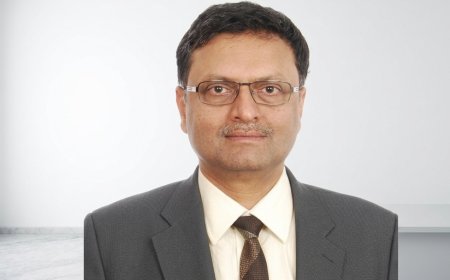
Robin Chacko joins as Associate Vice President and Global Head of Marketing and Communications. His mandate is expansive: global brand strategy, media relations, content development, commercial communications, digital and social media, investor communications, and global partnership narratives. He will also play a central role in shaping communications around the company's flagship Flux Halo arena project — a next-generation $2 billion venue in the GCC region designed to seat over 50,000 spectators and attract an estimated 10 million visitors annually upon completion in the late 2030s.
Chacko arrives with a formidable media and entertainment background spanning Disney Star, Zee TV, Colors TV, and Kuku FM — platforms that collectively reach hundreds of millions of Indian consumers. He has been recognised with industry awards including Promax BDA Awards and ABBY Awards for his work building brand narratives at the intersection of culture, entertainment, and commerce.
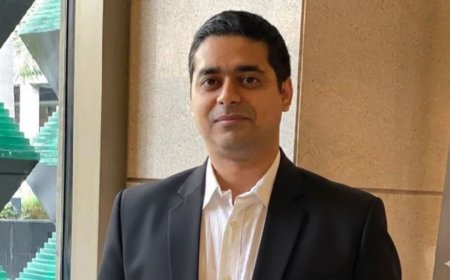
Stuti Singh joins simultaneously as Director of Communications, bringing over 15 years of strategic communications experience to the role. She joins from Adfactors PR, where she spent eight years in senior leadership positions working with major clients across sectors. In her new role, Singh will lead Trosmic Sports' communications strategy across markets and verticals, working closely with the leadership team to build a unified brand narrative as the company scales its global footprint.
What This Means for Your Brand
These two appointments together tell a story about how ambitious sports businesses must think about brand building in 2026 — and the lessons extend well beyond the sports industry.
1. Global sports brands need communications architecture, not just campaigns. Trosmic Sports is not building a single league or a single venue. It is constructing a multi-sport, multi-geography ecosystem spanning MMA, wrestling, boxing, and kabaddi — with a flagship arena project that will anchor sports and entertainment in the GCC for decades. That kind of institutional complexity requires communications professionals who can operate across investor relations, media partnerships, fan engagement, and cultural storytelling simultaneously. One-dimensional marketing hires would not be sufficient for this mandate.
2. The Flux Halo project demands world-class brand narrative management. A $2 billion arena development in the GCC is not just a construction project — it is a decade-long brand story that must be told to investors, governments, media partners, sporting federations, fans, and cultural communities across multiple countries and languages. The appointment of senior communications leadership at this stage of the project's development is strategically timed and absolutely necessary.
3. India-origin sports companies are increasingly playing on the global stage. Trosmic Sports represents a new breed of Indian sports business — one that is not content to build domestically and occasionally export, but is structurally designed to compete and win in international markets from day one. That ambition requires communications professionals who understand both Indian cultural context and global brand positioning — a combination that both Chacko and Singh appear to bring.
The forward-looking question: Can Trosmic Sports build the kind of global brand recognition that positions it alongside established international sports holding companies? The answer will depend heavily on how effectively the new communications team crafts and distributes the company's narrative over the next three to five years.
The Numbers Behind the News
The scale of Trosmic Sports' ambitions is genuinely significant. The Flux Halo arena — the company's flagship infrastructure project in the GCC — represents a $2 billion investment in next-generation sports and entertainment infrastructure, with a projected annual footfall of 10 million visitors once operational in the late 2030s.
For context, that visitor projection places Flux Halo in the same league as some of the world's most visited entertainment destinations. Building the brand narrative around a project of that magnitude — from groundbreaking through construction to opening — requires sustained, sophisticated, multi-audience communication that evolves over more than a decade.
Robin Chacko's appointment at this stage is precisely the right timing. Brand stories of this scale are built long before venues open their doors — through investor confidence, media anticipation, cultural community engagement, and the gradual accumulation of credibility that only consistent, high-quality communication can deliver.
Chacko himself framed his mandate with clarity and ambition: Trosmic Sports is applying institutional discipline to culturally embedded sporting assets — and his role is to define a new standard for how sports brands communicate at global scale. The phrase that stands out is his commitment to taking "India to the world" — a mission statement that positions Trosmic Sports not just as a sports business but as a cultural export vehicle for Indian sporting identity.
Stuti Singh's arrival adds the foundational communications architecture that large-scale narrative work requires — disciplined stakeholder management, consistent media relationships, and the institutional reputation-building expertise that eight years at one of India's most respected PR firms uniquely provides.
The brands.in Perspective
Trosmic Sports has made a sophisticated and well-timed pair of appointments — and the strategic thinking behind the hiring is as impressive as the individual credentials.
By appointing a Global Head of Marketing with deep entertainment media experience alongside a Director of Communications with institutional PR depth, the company has created a complementary leadership structure that covers both the creative and the credibility dimensions of brand building. These are not overlapping roles — they are mutually reinforcing ones.
What brands.in finds most compelling about this story is the explicit global ambition embedded in both appointments. Trosmic Sports is not building a domestic sports brand with international aspirations. It is building a global sports institution with Indian DNA — and that requires communications leadership that can code-switch fluently between Mumbai boardrooms, GCC government stakeholders, international media outlets, and digitally native sports fans across five continents.
The Flux Halo arena, when complete, will be one of the most significant sports infrastructure projects ever developed by an India-origin company. The brand story that Chacko and Singh build between now and that opening will determine whether the world sees Trosmic Sports as a regional player that built something big — or as a genuine global institution that happened to start in India.
That distinction is entirely a communications challenge. And the clock is already running.
Key Takeaways for Marketers
- Global sports brands require layered communications architecture — marketing and PR working in strategic alignment, not in silos
- Infrastructure projects of Flux Halo's scale demand decade-long brand narrative planning — not just launch communications
- India-origin global sports companies need bicultural communications fluency — domestic credibility and international positioning must coexist
- Entertainment media backgrounds bring storytelling depth to sports brand roles that traditional sports marketing experience alone cannot match
- Senior communications hires at growth stage signal institutional maturity — investors and partners read these appointments as confidence signals
FAQ
Q: Who is Robin Chacko and what will he do at Trosmic Sports? Robin Chacko is a media and entertainment marketing professional with experience at Disney Star, Zee TV, Colors TV, and Kuku FM. As AVP and Global Head of Marketing and Communications at Trosmic Sports, he will lead global brand strategy, media relations, content, investor communications, and the narrative rollout of the Flux Halo arena project.
Q: Who is Stuti Singh and what is her role at Trosmic Sports? Stuti Singh is a strategic communications leader with over 15 years of experience, including eight years in senior roles at Adfactors PR. As Director of Communications at Trosmic Sports, she will lead the company's communications strategy across markets and verticals, building a unified brand narrative as the business scales globally.
Q: What is the Flux Halo arena project? Flux Halo is Trosmic Sports' flagship infrastructure development — a next-generation sports and entertainment arena in the GCC region representing a $2 billion investment. Designed to seat over 50,000 spectators and attract approximately 10 million annual visitors, it is expected to be completed in the late 2030s and positions Trosmic Sports as a major global sports infrastructure developer.
Closing CTA
Trosmic Sports is attempting something genuinely rare — building a globally scaled, India-origin sports institution from the ground up. Do you think Indian sports companies have what it takes to compete with established global sports holding companies on the world stage — or is the structural gap still too wide to bridge?
Share your perspective below — and follow brands.in for daily leadership intelligence, sports marketing insights, and brand strategy analysis built for India's most forward-thinking business professionals.
What's Your Reaction?
 Like
0
Like
0
 Dislike
0
Dislike
0
 Love
0
Love
0
 Funny
0
Funny
0
 Angry
0
Angry
0
 Sad
0
Sad
0
 Wow
0
Wow
0