




























Airbnb's Smartest India Move Yet: Group Travel, Real Emotions, Big Stars
Airbnb's new India campaign with Vijay Deverakonda & Rashmika Mandanna spotlights group travel culture. Here's what every Indian marketer needs to know.

Introduction
What if the future of travel advertising in India is not about escaping together — but about arriving together?
For decades, aspirational travel campaigns sold the dream of the perfect couple, the perfect beach, the perfect sunset. Airbnb has just torn up that playbook in India. By casting Vijay Deverakonda and Rashmika Mandanna — one of the country's most beloved real-life couples — in a deeply personal post-wedding getaway film, the platform has tapped into something far more powerful than celebrity glamour. It has tapped into how Indians actually travel.
India is a collectivist culture. Weddings are not intimate affairs — they are community events. Friendships are not casual bonds — they are lifelong commitments celebrated loudly and often. And travel, increasingly, is an extension of all of that. The rise of group holidays, reunion trips, and the growing 'buddymoon' culture are not quirks of the Indian market. They are its defining characteristics.
Airbnb's new campaign understands this. And that understanding is the real story here — not just for travel brands, but for every marketer trying to connect with the modern Indian consumer.
What Just Happened
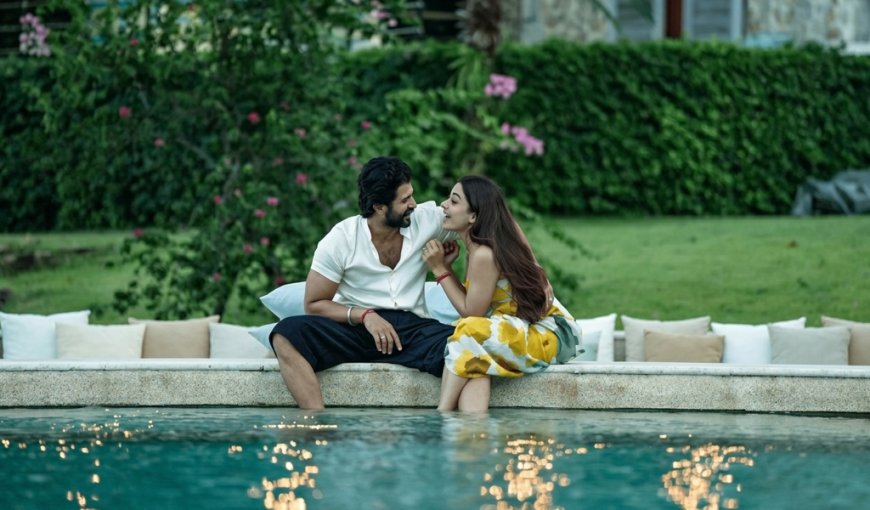
Airbnb has launched a new brand film for the Indian market, featuring actors Vijay Deverakonda and Rashmika Mandanna. The campaign is set in Koh Samui, Thailand, and follows the couple during their first getaway after their wedding.
The film is built around a private villa stay — a sprawling oceanfront property with open shared spaces, an infinity pool, and the kind of lived-in comfort that a standard hotel room simply cannot replicate. Crucially, the trip is not a private honeymoon. Friends are present throughout, sharing meals, lounging by the pool, and creating the kind of informal, unhurried moments that define meaningful travel.
What gives the film its emotional weight is the voiceover treatment. Instead of a conventional brand narration, the film draws on personal notes the couple wrote to each other — quiet, intimate reflections layered over everyday scenes. This creative decision transforms what could have been a glossy travel ad into something that feels genuinely observed.
The campaign directly connects to a sharp consumer insight: according to Airbnb, nearly 40 percent of summer travel searches by Indian users on the platform are for group stays. That single statistic tells you everything about why this campaign was made and why it was made this way.
What This Means for Your Brand
Airbnb has not just launched a campaign. It has issued a creative brief to every brand competing for the attention of the modern Indian consumer.
Here is what marketers should take away.
Group experience is the new aspiration. For a long time, Indian advertising equated aspiration with privacy — the couple alone at the resort, the executive in the business-class cabin. That framing is increasingly out of step with how younger Indian consumers actually define a good life. For millennials and Gen Z in India, the best experiences are shared ones. A luxury villa is more desirable with your five closest friends in it than without them. Brands that build campaigns around collective joy will find audiences that are ready to respond.
Real stories beat scripted stories. The Airbnb film works because it does not feel manufactured. The voiceover device — personal notes between two real people who are genuinely in a relationship — creates an emotional texture that no amount of production value can fake. Indian consumers, particularly in the 25-40 age bracket, have developed a sharp instinct for inauthenticity. The brands winning their trust are the ones willing to be genuinely vulnerable in their storytelling.
Context transforms celebrity. Vijay Deverakonda and Rashmika Mandanna are not new to brand endorsements. But Airbnb has used them differently. Rather than treating them as famous faces attached to a product, the campaign uses their real relationship — their actual wedding, their actual dynamic — as the creative foundation. The result is a campaign that feels personal rather than promotional.
The contrarian view worth considering: as this style of 'authentic unscripted' storytelling becomes the dominant template in Indian advertising, its power will diminish. The brands that figure out what comes after authenticity will have a significant advantage.
Expert Take
The numbers behind this campaign reveal more than just a smart creative brief — they reveal a structural shift in how Indians travel.
Nearly 40 percent of Indian users' summer searches on Airbnb targeting group stays is a striking figure for any platform analyst. It signals that shared accommodation is no longer a budget compromise — it is a lifestyle preference. Indian travelers are actively choosing to stay together over staying apart.
This aligns with broader research on post-pandemic consumer behavior in India. Travel behavior surveys conducted across 2023 and 2024 consistently showed that Indian travelers — particularly in the 25-45 age group — placed higher value on shared experiences than on private luxury when planning trips. The emotional return on a group holiday was rated higher than the comfort return on a premium solo stay.
The 'buddymoon' trend is a specific expression of this. Traveling with close friends or family after a wedding reflects a cultural reality that has always existed in India — the idea that the people you love most should be part of your most important moments, not excluded from them. Airbnb has not created this behavior. It has recognized it, named it, and built a campaign around it. That is smart brand strategy.
The brands.in Perspective
Airbnb has done what most global brands operating in India attempt but rarely achieve: it has made something that feels Indian without performing Indianness.
There are no forced cultural references here, no Bollywood tropes, no obvious nods to tradition for tradition's sake. Instead, the campaign reflects something quieter and more accurate — the Indian instinct to celebrate together, to travel together, and to mark the big moments of life surrounded by the people who matter.
The choice of Vijay Deverakonda and Rashmika Mandanna is also worth examining beyond their star power. Both carry strong regional identities — rooted in South Indian cinema — while commanding a genuinely pan-India following. In a market where northern metro brands still too often dominate the cultural conversation, this casting choice signals an understanding of how India's entertainment and consumer landscape has genuinely shifted.
The real risk for Airbnb now is the follow-through. A strong brand film creates an expectation. Indian consumers will notice if the product experience — the actual villa, the actual support, the actual reliability of the platform — does not match the emotional promise of the campaign. In 2026, the gap between brand storytelling and brand delivery is where consumer trust is won or lost.
For Indian marketers watching from the sidelines: this campaign is not just a benchmark for travel advertising. It is a lesson in reading your audience with accuracy, courage, and creative conviction.
Key Takeaways for Marketers
- Group travel now represents nearly 40 percent of Indian summer searches on Airbnb — a signal no travel brand can afford to ignore
- Authentic emotional storytelling consistently outperforms polished aspirational advertising with Indian millennials
- The 'buddymoon' and group holiday trend reflects deep cultural values — not a passing fad
- Celebrity campaigns deliver strongest results when personal narrative aligns organically with brand messaging
- Shared spaces and collective experiences are the new premium category in Indian travel and lifestyle marketing
- Brand delivery must match brand promise — strong creative raises consumer expectations, not just awareness
Frequently Asked Questions
Q: Why did Airbnb choose Vijay Deverakonda and Rashmika Mandanna for this campaign?
Beyond their pan-India star power, the couple brought something no casting brief can manufacture — a real, publicly known relationship and an actual recent wedding. This gave the campaign emotional authenticity that would have been impossible to replicate with a fictional couple or separate brand ambassadors.
Q: What is a buddymoon and why is it relevant to Indian brands right now?
A buddymoon is when newlyweds travel alongside close friends or family rather than on a private honeymoon. It reflects India's collectivist social culture — the belief that milestone moments are richer when shared. For brands in travel, hospitality, fashion, and food, it represents a growing high-value consumer segment worth targeting directly.
Q: Does group travel data in India actually support this campaign's premise?
Yes. Airbnb's own platform data shows close to 40 percent of summer travel searches by Indian users target group stays. This is consistent with broader industry research showing a post-pandemic shift among Indian travelers toward shared, experience-led trips over private luxury breaks.
Closing
Has your brand found a way to speak to India's group travel culture — or are you still selling the solo sunset? Tell us how you're approaching it in the comments below.
Follow brands.in every day for sharp, original analysis on Indian brand strategy, campaign breakdowns, and the marketing moves that actually matter.
What's Your Reaction?
 Like
0
Like
0
 Dislike
0
Dislike
0
 Love
0
Love
0
 Funny
0
Funny
0
 Angry
0
Angry
0
 Sad
0
Sad
0
 Wow
0
Wow
0