



























Godrej Flips Indian Hospitality on Its Head to Fight Mosquito-Borne Diseases
Godrej Consumer Products launches 'Machar Hai, Mehman Nahi' — a CSR film under its EMBED initiative that flips India's hospitality culture to drive mosquito prevention awareness. The campaign targets dengue, malaria and chikungunya through community outreach, school programmes, wall art and digital storytelling across India.

Introduction
India is a nation that takes hospitality seriously. "Atithi Devo Bhava" is not just a tourism slogan — it is a lived cultural value, woven into how Indian households operate. But what happens when that same instinct of welcoming everyone through the door becomes a public health liability? Godrej Consumer Products has built an entire campaign around that uncomfortable question. Their latest CSR film under the EMBED initiative does something most public health messaging fails to do: it makes people laugh, think, and change behaviour — all in one sitting. And it does so by borrowing the language of culture rather than lecturing from a health pamphlet.
What Just Happened
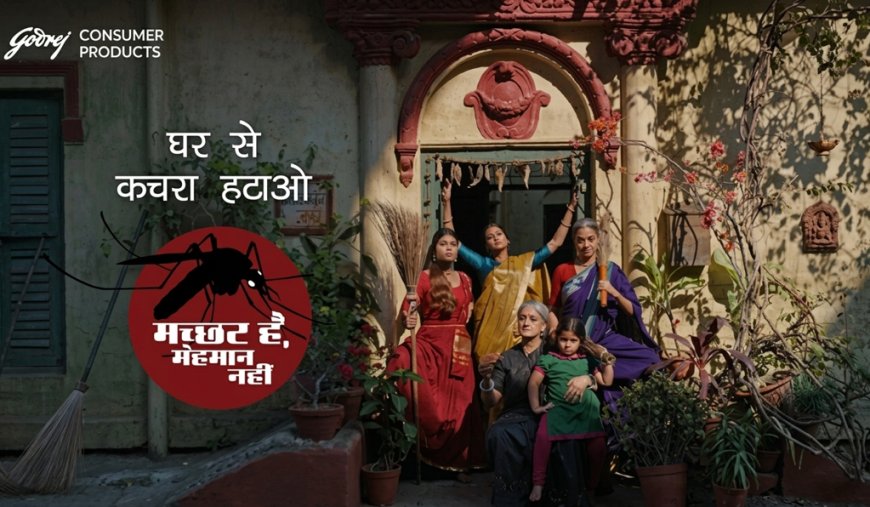
Godrej Consumer Products Limited has released a public service film titled 'Machar Hai, Mehman Nahi' — translating roughly to "a mosquito is not a guest" — as part of its long-running CSR programme focused on eliminating mosquito-borne endemic diseases, known internally as EMBED.
The campaign targets one of India's most persistent but under-addressed public health challenges. Dengue, malaria, and chikungunya collectively affect millions of Indian households every year, yet the everyday presence of mosquitoes is so normalised that most families take minimal preventive action until illness strikes.
The film's creative hook is rooted in Rajasthan's iconic welcome phrase "Padharo Mare Desh" — and cheekily inverts it to "Na Padharo Mare Desh" when it comes to mosquitoes. It calls out common household habits — stagnant water sitting in desert coolers, uncovered water containers, neglected corners of homes — that quietly become mosquito breeding grounds without families realising it.
The campaign will roll out across multiple channels including school programmes, community drives, large-scale wall murals across Maharashtra, radio storytelling, and a digital campaign built around the call to action: "Unfriend the Mosquito."
What This Means for Your Brand
This campaign is a masterclass in purpose-led marketing done right — and there are several lessons here for brand managers across categories.
First, the cultural insight is everything. Most public health campaigns in India default to fear-based messaging: photographs of rashes, statistics about fatalities, warnings in bold red. GCPL has taken the opposite approach, anchoring the campaign in warmth and humour before delivering the behavioural nudge. The result is messaging that feels like a conversation rather than a lecture — and conversations are far more shareable.
Second, the campaign demonstrates how a product-adjacent CSR initiative can build genuine brand equity without feeling like a sales pitch. GCPL sells mosquito repellents commercially, but this film never mentions a product. It focuses entirely on household behaviour change. That restraint is strategically smart — it builds category relevance and consumer trust simultaneously.
For FMCG brands operating in health, hygiene, and home care categories, this is the template: find the cultural tension, reframe it memorably, and let behaviour change do the commercial heavy lifting over time.
The forward-looking question worth asking: as India's public health infrastructure continues to strain under the burden of preventable vector-borne diseases, brands with genuine skin in the game — like GCPL — have an opportunity to own the prevention conversation at scale. That is a brand position no advertising budget alone can buy.
The Numbers Behind the News
The public health context behind this campaign is stark. Mosquito-borne diseases remain among the leading causes of preventable illness across India, with dengue alone reporting hundreds of thousands of cases annually in recent years — and significant underreporting suspected in rural areas.
What makes GCPL's EMBED initiative notable is its sustained, multi-year commitment rather than a one-off campaign activation. The programme spans community education, behavioural change communication, and school-level awareness — layers that go well beyond a viral film. Research consistently shows that household-level behavioural change in mosquito prevention — covering water containers, eliminating stagnant water, using repellents consistently — is among the most cost-effective public health interventions available.
The multi-channel rollout of 'Machar Hai, Mehman Nahi' is also worth noting from a media planning perspective. Wall art in Maharashtra, radio storytelling, digital amplification, and school engagement are not random channel choices — they are designed to reach both urban and semi-urban households across different media consumption habits, a genuine attempt at inclusive reach rather than metro-only visibility.
The brands.in Perspective
Indian advertising has a long and occasionally lazy history of borrowing cultural references for emotional impact without earning them. 'Machar Hai, Mehman Nahi' is different because the cultural insight is not decoration — it is the entire argument. The campaign understands that changing behaviour in Indian households requires meeting people inside their own value systems, not outside them. Swati Bhattacharya's creative instinct to build an "anti-hospitality qawwali" around a mosquito is the kind of idea that only works when the writer genuinely understands the culture rather than researching it from a distance. Godrej has done something rare here: made a CSR film that is actually good advertising.
Key Takeaways for Marketers
- Cultural insight beats fear-based messaging when driving behavioural change at scale
- Product-adjacent CSR builds brand equity without requiring a direct sales message
- Multi-channel rollouts combining wall art, radio, and digital maximise household reach
- Humour and warmth outperform warnings in public health communication
- Sustained CSR programmes create brand positions that paid advertising cannot replicate
Frequently Asked Questions
What is GCPL's EMBED initiative? EMBED stands for Elimination of Mosquito Borne Endemic Disease — a long-running CSR programme by Godrej Consumer Products focused on driving awareness, behavioural change, and community education around mosquito prevention across India.
What is the central message of the 'Machar Hai, Mehman Nahi' campaign? The campaign reframes mosquitoes as unwelcome intruders rather than harmless everyday nuisances, urging households to actively eliminate breeding conditions like stagnant water and uncovered containers rather than passively tolerating mosquito presence.
Why did GCPL use a hospitality theme for a public health campaign? India's cultural identity is deeply tied to the tradition of welcoming guests. By inverting that instinct — arguing that mosquitoes deserve no such welcome — the campaign creates a memorable, emotionally resonant contrast that drives the prevention message home far more effectively than conventional health warnings.
Stay Ahead of the Curve
Could your brand find its next big campaign inside a cultural contradiction hiding in plain sight? Godrej just proved it is possible — and the results speak for themselves. Tell us: which Indian brand do you think does purpose-led marketing best? Drop your pick in the comments and follow brands.in for daily brand intelligence that keeps Indian marketers one step ahead.
What's Your Reaction?
 Like
0
Like
0
 Dislike
0
Dislike
0
 Love
0
Love
0
 Funny
0
Funny
0
 Angry
0
Angry
0
 Sad
0
Sad
0
 Wow
0
Wow
0