

































The Paradox of Influence: Why Brands Are Failing Women Consumers
HerKey and Havas Creative India reveal women influence 70–85% of purchases in India, yet most brands fail to engage them strategically. Key findings inside.

Introduction
Women influence between 70 and 85% of all purchase decisions across consumer categories in India. That is not a niche statistic — that is the single most important consumer insight any Indian brand marketer should have tattooed on their strategy document. Yet a new cross-industry report by HerKey and Havas Creative India reveals a striking paradox: brands widely recognise women's purchasing power but consistently fail to translate that recognition into meaningful marketing strategy. The gap between what brands know and what they actually do is costing them growth — and this report names it clearly.
The Big Announcement
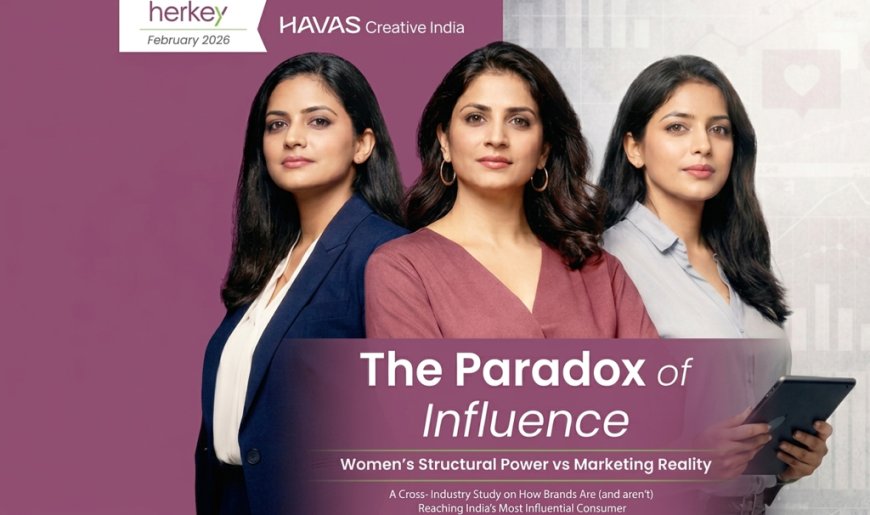
HerKey, an AI-powered career engagement platform built to support women across their professional journeys, has partnered with Havas Creative India to release a landmark study titled "The Paradox of Influence: Women's Structural Power vs Marketing Reality."
The report draws on survey data, in-depth interviews, and secondary research gathered from senior marketing leaders — including CMOs, VPs of Marketing, Brand Managers, and Category Leads — across sectors including FMCG, fashion, retail, BFSI, healthcare, auto, and personal care.
The headline finding is both striking and sobering. While women influence 70–85% of purchase decisions across categories in India, only 14% of marketers consider their organisations to be leaders in women-centric marketing. Meanwhile, 79% acknowledge that women's influence has grown significantly over the past two years.
Recognition is high. Strategic commitment is not. That gap is what this report sets out to close — and it arrives at a moment when every major Indian brand is rethinking its consumer engagement playbook.
What This Means for Your Brand
The Paradox of Influence report should land on the desk of every brand manager in India — not as bedside reading, but as a business brief.
Consider the sectors where the gap is most glaring. In categories like automobile, BFSI, and real estate — where women's influence is rising rapidly — marketing initiatives targeting women remain largely experimental or occasional. Yet India's urban woman today is increasingly the primary financial decision-maker in her household, a co-buyer of vehicles, and a growing force in property purchases. Brands in these sectors are leaving significant commercial ground uncontested.
Even in traditionally "women's categories" like fashion, personal care, FMCG, and retail, only 50–70% of brands run regular women-focused campaigns. That means up to half the brands in categories built around women consumers are still not showing up with consistent, strategic intent.
The report also exposes what it calls the "occasion trap" — where brands concentrate all their women-centric communication around Women's Day or Mother's Day and then go quiet for the remaining 363 days. Indian women are not a seasonal audience. Treating them as one is both a strategic error and a missed commercial opportunity.
The contrarian take? Insight gaps — not budget constraints — are the primary barrier. Most brands already have the budget. What they lack is the depth of understanding to spend it well.
The Numbers Behind the News
The report's data paints a clear picture of where Indian brand marketing stands — and where it needs to go.
Nearly one-third of brands still portray women primarily as caregivers in their advertising. While marketers increasingly acknowledge that this is limiting, measurement challenges and an over-reliance on familiar narratives continue to slow meaningful change. The problem is not awareness. It is inertia.
Looking ahead, the most forward-thinking brands are shifting from broadcast to relationship. The report finds that marketers are prioritising community-led ecosystems (43%), AI-driven personalisation (39%), and regional relevance (37%) as their next strategic moves. This signals a decisive shift away from mass reach toward deeper, more sustained engagement — a transition that mirrors how India's most digitally active women consumers already behave.
Neha Bagaria, Founder and CEO of HerKey, put it plainly: for brands willing to invest in genuine depth of consumer insight, the opportunity is not just better marketing but meaningful and sustained growth.
The brands.in Perspective
India's marketing industry loves celebrating women in March — and then promptly moving on. The Paradox of Influence report is a direct challenge to that comfortable pattern. The data is clear: women are not a campaign moment. They are the market. Brands that continue to engage them through lazy stereotypes, occasional campaigns, and surface-level insight are not just failing at inclusion — they are failing at commerce. The brands that will win the next decade of Indian consumer growth are the ones building year-round, insight-led, culturally intelligent relationships with women. Everything else is just noise with good intentions.
Key Takeaways for Marketers
- Women influence 70–85% of all purchase decisions across categories in India
- Only 14% of marketers consider themselves leaders in women-centric marketing
- Insight gaps — not budgets — are the biggest barrier to effective women-focused marketing
- Nearly one-third of brands still portray women primarily as caregivers in campaigns
- Brands are shifting toward community-led ecosystems, AI personalisation, and regional relevance
FAQ
Q: What is the Paradox of Influence report about? It is a cross-industry study by HerKey and Havas Creative India examining the gap between women's purchasing power in India and how brands currently engage them. The report covers sectors including FMCG, fashion, BFSI, auto, healthcare, retail, and personal care.
Q: What is the "occasion trap" in women-centric marketing? The occasion trap refers to brands concentrating their women-focused communication around symbolic dates like International Women's Day or Mother's Day rather than building consistent, year-round engagement strategies that reflect women's sustained influence as consumers.
Q: What percentage of purchase decisions do women influence in India? According to the HerKey and Havas Creative India report, women influence between 70 and 85% of purchase decisions across consumer categories in India — making them the country's single most influential consumer group across virtually every major sector.
Closing
Is your brand engaging women as a strategic priority all year — or only when the calendar tells you to? We'd love to hear how your organisation is bridging the gap. Follow brands.in for daily brand intelligence, industry reports, and the marketing insights that keep India's sharpest marketers ahead of the curve.
What's Your Reaction?
 Like
0
Like
0
 Dislike
0
Dislike
0
 Love
0
Love
0
 Funny
0
Funny
0
 Angry
0
Angry
0
 Sad
0
Sad
0
 Wow
0
Wow
0