






















Remembering Piyush Pandey: The Man Who Gave India Its Advertising Voice
Remembering Piyush Pandey on his 71st birth anniversary — the creative legend who transformed Indian advertising with Fevicol, Cadbury, and Vodafone ZooZoos.

Introduction
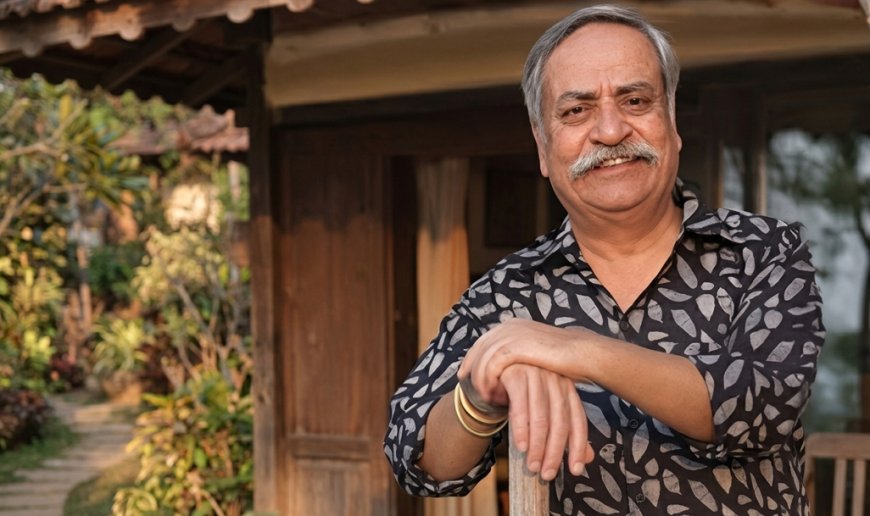
What does it take to change the way an entire nation speaks about itself? For Piyush Pandey, the answer was deceptively simple: listen first, then tell the truth. Every year, April 9 holds a quiet significance for India's advertising community — the day it claims as his own. But this year, that date carries a different weight. Pandey is no longer here to receive its warmth. His passing in October 2025 left a void that no campaign brief can fill. Yet, his stories live on — and that, perhaps, is the most Piyush Pandey thing of all.
The Big Announcement
On what would have been his 71st birthday, India's advertising industry has come together — across agency corridors, creative studios, and social feeds — to honour the man they called the Godfather of Indian Advertising.
Piyush Pandey passed away on October 23, 2025, following complications from pneumonia. The tributes that followed were not the choreographed kind. They were personal, emotional, and deeply felt — exactly the kind of response his work always drew.
He joined Ogilvy in 1982, not straight from a business school but after stints as a cricketer, a tea taster, and a construction worker. At 27, he walked into an industry still heavily influenced by Western templates and quietly began dismantling them. By the time he was done, Indian advertising had a voice — warm, humorous, grounded, and unmistakably desi.
Though official records place his birth on September 5, 1955, it is April 9 that the advertising fraternity has always claimed as his day. A fitting tribute to a man who belonged, in every sense, to the people.
What This Means for Your Brand
Pandey's legacy is not archival — it is instructional. His work offers a masterclass that remains as relevant to a brand manager in 2026 as it was to a creative director in 1992.
Consider the Fevicol campaigns. A brand of adhesive — functional, unremarkable on the surface — became one of the most loved names in Indian popular culture. The secret? Pandey never sold the product. He sold a feeling: the unbreakable bond between people, places, and moments. For any brand today navigating a crowded digital marketplace, that is the blueprint.
The Cadbury Dairy Milk 'Kuch Khaas Hai' campaign did something equally transformative. Chocolate in India was, for the longest time, a children's product. Pandey repositioned it as a symbol of spontaneous adult joy — most memorably through the image of a young woman dancing on a cricket field. Simple. Surprising. Unforgettable.
Then there were the Vodafone ZooZoos — quirky, wordless, yet universally understood — and the 'Do Boond Zindagi Ke' Polio Abhiyan, which used advertising not to sell, but to save lives.
The contrarian insight here is this: in an era obsessed with targeting, personalisation, and performance metrics, Pandey's most powerful campaigns were built on mass emotion, not micro-segmentation. And they worked harder.
Expert Take
Pandey received the Padma Shri from the Government of India — a recognition that went well beyond industry circles. He also received the Cannes Lions' Lion of St. Mark, one of the highest honours in global advertising, alongside his brother, filmmaker Prasoon Pandey.
Yet, for all his accolades, colleagues consistently describe a man who remained close to the craft and closer still to the people around him. He was known for his ability to take a complex client brief and distil it into a single, powerful human truth — often over a cup of tea, and almost always with a well-timed anecdote.
His creative philosophy rested on one conviction: advertising must feel like something. Not just communicate something, but feel like something. In a world increasingly shaped by data dashboards and A/B testing, that philosophy sounds almost radical. Which is precisely why it endures.
The brands.in Perspective
Here is the uncomfortable truth the industry must sit with: in the race to be data-driven, Indian advertising has sometimes forgotten to be human-driven. Pandey never made that trade-off. He understood that numbers can tell you what people do — but only stories can tell you why. As brands invest heavily in AI-generated content and programmatic reach, his legacy is a standing challenge: can your campaign make someone feel something real? If not, the reach means nothing.
Key Takeaways for Marketers
- Root creativity in culture — local insight outperforms borrowed templates every time
- Sell emotion, not just features — Fevicol never sold adhesive; it sold belonging
- Simplicity is a strategy — the best briefs collapse into one human truth
- Mass emotion still works — not every campaign needs micro-targeting to move people
- Mentorship is a legacy multiplier — Pandey's influence lives on through every creative he shaped
FAQ
Q: Why is April 9 significant for the advertising industry, even though Piyush Pandey's official birthday is September 5? April 9 is the date the advertising fraternity has long claimed as Pandey's own — a community tradition that reflects how deeply personal his connection with the industry always was.
Q: Which Piyush Pandey campaign had the most cultural impact in India? It is hard to pick just one, but the Cadbury Dairy Milk 'Kuch Khaas Hai' campaign fundamentally shifted how India perceived chocolate — from a children's treat to a symbol of shared adult joy.
Q: What can modern marketers learn from Piyush Pandey's approach? That authenticity cannot be automated. His work thrived on cultural observation, emotional honesty, and storytelling that respected the intelligence of the audience — lessons no algorithm can replicate.
Closing
Piyush Pandey did not just create advertisements — he created memories that attached themselves to the milestones of Indian life. A Cadbury moment at a cricket match. A Fevicol joke at the family dinner table. A ZooZoo that made a child and her grandmother laugh at the same time.
That is the measure of great advertising. And that is the standard he leaves behind.
Which Piyush Pandey campaign do you remember most — and why did it stay with you? Share your memory in the comments, and follow brands.in for daily brand intelligence that keeps you ahead of the curve.
What's Your Reaction?
 Like
0
Like
0
 Dislike
0
Dislike
0
 Love
0
Love
0
 Funny
0
Funny
0
 Angry
0
Angry
0
 Sad
0
Sad
0
 Wow
0
Wow
0