



















Ad volumes rise 4% in T20 World Cup 2026 despite 63% fall in advertisers
Ad volumes rose 4% in T20 World Cup 2026 even as advertisers fell 63%. Here is what TAM Sports data means for Indian brand strategy.

Fewer brands, bigger cheques — cricket's ad economy is getting exclusive.
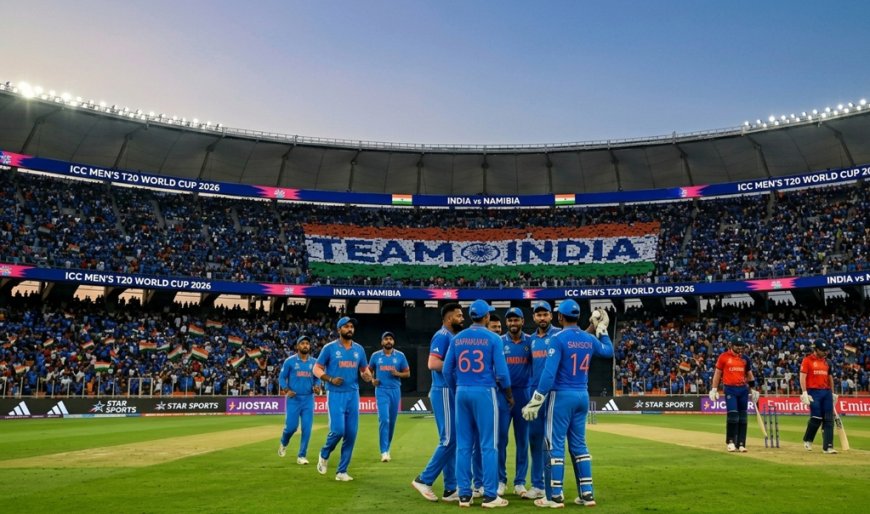
Is Indian cricket advertising entering an era of quality over quantity? The ICC Men's T20 World Cup 2026 just handed marketers a data-rich reality check. Ad volumes climbed while advertiser headcount collapsed — and that tension tells us everything about where sports marketing is heading in India right now. Here is what the TAM Sports numbers reveal, and why every CMO should be paying attention.
What just happened
TAM Sports released its commercial advertising analysis for the ICC Men's T20 World Cup 2026, comparing it against the 2024 edition. The headline finding sounds contradictory at first: ad volumes per match grew 4%, yet the number of advertisers fell by 63%, categories dropped 55%, and brands shrank by 68%.
The tournament final alone saw an 18% surge in ad volumes — and this happened regardless of which team won, suggesting that commercial packaging, not match outcomes, drove the spike.
India matches remained the undisputed engine of ad demand, pulling in 66% higher volumes than non-India games. The Super 8 stage was another breakout story, clocking a 48% jump in ad volumes per match versus 2024.
OpenAI topped the advertiser chart with a 12% share, followed by Coca-Cola India and Mahindra & Mahindra. At the brand level, ChatGPT led, trailed by Apollo Tyres, Campa Sure, Emirates, and Sprite. Crucially, not a single name from the 2024 top five appeared in 2026's list — a complete leadership reshuffle.
What this means for your brand
The most important signal here is not the 4% volume growth. It is the 63% drop in advertisers alongside that growth. That gap tells you the cost of entry has risen sharply — and only brands with serious war chests and a clear cricket-led strategy are playing.
For a mid-size Indian brand, this is both a warning and an opportunity. The warning: if you are showing up with a small budget and no plan, you will be drowned out by OpenAI-level spends and Coca-Cola's scale. The opportunity: with fewer brands in the mix, a well-placed, well-timed campaign in a non-India match or early-stage game can actually cut through — because the clutter has thinned.
The Automobile and E-commerce categories together held 29% of ad share. If your brand sits outside these two sectors, you are competing for the remaining 71% of inventory against fewer rivals than in 2024. That is not a bad position.
The forward-looking view: as AI-native brands like OpenAI and ChatGPT dominate premium inventory, expect the definition of a "credible cricket advertiser" to shift. Tech and fintech players will increasingly muscle out legacy FMCG brands in high-visibility slots.
The numbers behind the news
The concentration story is the real headline. The top five categories held 53% of ad volumes in 2026, up from 42% in 2024. The top five advertisers held 39% of total volumes — identical to 2024, despite a completely new set of names.
What does that tell us? The structure of dominance is stable even when the players change. Whether it is a legacy auto brand or a Silicon Valley AI company, the top tier locks in roughly the same share. This is a classic oligopoly pattern — and it is hardening with each edition.
Ad format preferences also shifted. The 11–20 second slot is now the dominant format, followed by sub-10 second ads. Long-form spots are losing ground in the fast-cut, second-screen environment of live T20 cricket. Brands chasing recall over storytelling are winning the format game.
The brands.in perspective
The ICC T20 World Cup 2026 has essentially become India's most expensive gated community for advertisers. The velvet rope is real — and it is getting harder to cross. The arrival of OpenAI and ChatGPT at the top of the chart is not just a curiosity; it signals that global tech giants now view Indian cricket as a mainstream brand-building vehicle, not an experimental market. Indian brands need to decide quickly: do you compete on the same field, or do you find smarter, leaner ways to ride the cricket wave without paying stadium-entry prices?
Key takeaways for marketers
- Ad volumes grew 4% even as advertiser count fell by 63%
- India matches drive 66% more ad volumes than non-India games
- Super 8 stage saw a 48% spike — a key phase to target
- Top 5 categories now hold 53% share, up from 42% in 2024
- 11–20 second ads are the dominant format — keep it short and sharp
- OpenAI and ChatGPT entered as top spenders — tech is the new FMCG in cricket
FAQ
Why did advertiser numbers fall even though ad volumes went up? Rising inventory costs and premium pricing have made cricket advertising accessible mainly to large-budget players. Fewer brands are spending more — a consolidation trend seen across premium sports globally.
Which category dominated T20 World Cup 2026 advertising? Automobile (Cars) led with a 15% share, followed by E-commerce Other Services at 14%. Together, the top five categories held 53% of total ad volumes.
Is it worth advertising in non-India T20 matches? Yes — non-India matches offer lower entry costs and less clutter. With fewer advertisers overall in 2026, a focused campaign in these games can deliver strong visibility at a fraction of the cost.
Closing
Cricket advertising is no longer a numbers game — it is a power game. As fewer brands command more voice, the real question is: is your brand building a cricket strategy, or just buying a spot? Tell us how your brand is approaching premium sports inventory in 2026 — drop your thoughts below. And follow brands.in for daily brand intelligence that keeps you ahead of the curve.
What's Your Reaction?
 Like
0
Like
0
 Dislike
0
Dislike
0
 Love
0
Love
0
 Funny
0
Funny
0
 Angry
0
Angry
0
 Sad
0
Sad
0
 Wow
0
Wow
0