

















Unilever Bets Big on Influencer Marketing: What the SAMY Mandate Means for Global Brands
Unilever appoints SAMY for global influencer strategy across Knorr and Hellmann's in 13 markets. Here's what this mandate means for brands and marketers worldwide.

Introduction
How do you make a mayonnaise brand feel culturally relevant in Indonesia, Germany, Brazil, and the United Kingdom — simultaneously? That is not a hypothetical question. It is the exact brief that Unilever handed to social-first agency SAMY after a competitive multi-agency pitch involving seven contenders. The appointment marks one of the most significant influencer marketing mandates of 2026 — not just for its scale, but for what it signals about where global brand building is heading. For Indian marketers watching from the sidelines, this is a case study worth examining very closely.
The Big Announcement
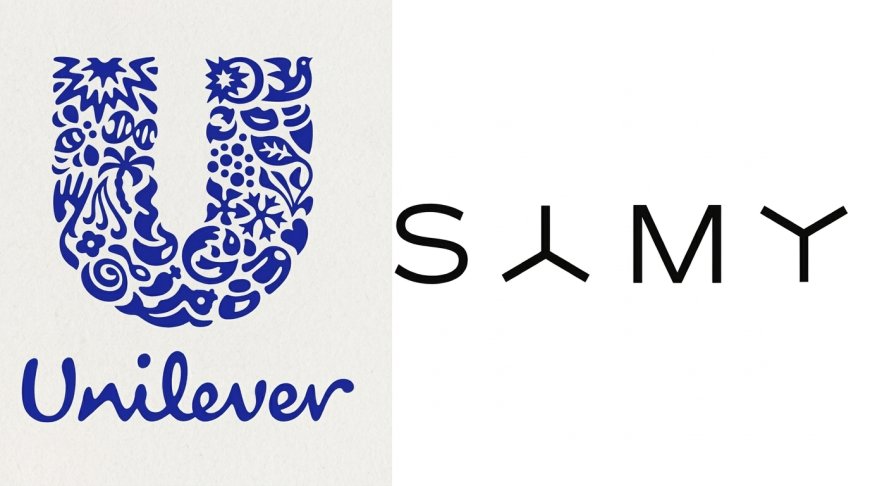
Unilever has formally appointed SAMY, a social-first creative and influencer agency, to lead influencer strategy for its global foods business. The mandate spans 13 markets including the United States, United Kingdom, Germany, Brazil, Indonesia, France, Mexico, Poland, Pakistan, the Philippines, Argentina, Canada, and Turkey.
The account will be centrally managed from the UK, supported by dedicated local teams in each market. At the heart of the engagement is SAMY's proprietary technology platform, Maia, which provides access to a creator network spanning over 120 million influencers globally, paired with performance data infrastructure designed to track and optimise creator partnerships at scale.
The mandate covers two of Unilever's most iconic food brands — Knorr and Hellmann's — with the brief centred on building culturally authentic creator partnerships that can be orchestrated globally while remaining genuinely relevant locally.
This appointment followed a structured multi-agency pitch process, underscoring that Unilever treated this decision with the same rigour it applies to traditional media agency reviews — a signal in itself about how seriously the organisation now treats influencer marketing as a core brand-building discipline.
What This Means for Your Brand
The Unilever-SAMY mandate is significant for three reasons that extend well beyond the two companies involved.
First, it confirms that influencer marketing has graduated from tactical to strategic. When one of the world's largest consumer goods companies runs a formal multi-agency pitch for an influencer mandate — the same process typically reserved for media planning or creative accounts — it sends an unambiguous signal to the industry. Creator partnerships are no longer a bolt-on to the marketing plan. They are the plan.
Second, the "glocal" model SAMY is deploying deserves close attention from Indian brand managers. The framework — centralised strategy, locally executed, culturally calibrated — is precisely the challenge that multinational brands operating in India face every single day. A global brand brief that lands in Mumbai needs to feel like it was written for Mumbai, not adapted from a template built for Manchester. The infrastructure SAMY is building for Unilever is a potential blueprint for how Indian arms of global businesses could approach creator marketing more systematically.
Third, the technology dimension is telling. SAMY's Maia platform — offering access to over 120 million creators alongside performance measurement tools — points to the direction the entire influencer industry is moving. Gut-feel creator selection is being replaced by data-informed partnership decisions. Brands that are still choosing influencers based on follower counts alone are operating with an outdated model.
The contrarian view? Scale in influencer marketing carries its own risks. The more centralised and systematised creator partnerships become, the greater the danger of losing the authentic, spontaneous quality that makes creator content effective in the first place. Unilever and SAMY will need to ensure their frameworks enable local creativity rather than constrain it.
The Numbers Behind the News
The scale of this mandate is worth sitting with for a moment. Access to 120 million creators globally is not just a large number — it represents a fundamental shift in how brand-creator relationships are conceptualised. Rather than curating a shortlist of hero influencers for a campaign, Unilever is building infrastructure to activate creators continuously, at varying tiers, across thirteen culturally distinct markets.
This approach reflects broader industry data suggesting that mid-tier and micro-creators — those with smaller but highly engaged, niche audiences — consistently outperform mega-influencers on metrics like engagement rate, trust, and purchase intent. A platform like Maia, which can identify and activate the right creator profile for the right market moment, makes this kind of nuanced, always-on influencer activity operationally viable at enterprise scale.
Meg Bass, Global Media Manager for Unilever Foods, articulated the strategic intent clearly: the goal is to grow brands by embedding them authentically in culture, using creators to help brand stories travel further and resonate more deeply across diverse markets.
Sonsoles Piñeiro Kruik, Chief Growth Officer at SAMY, acknowledged the complexity directly — orchestrating influencer activity across 13 markets within an organisation of Unilever's scale requires bringing hyper-local intelligence into a shared global system, ensuring creator partnerships reflect local market realities rather than a uniform global template.
The brands.in Perspective
Unilever's SAMY appointment is a watershed moment for the influencer marketing industry — not because of its size, but because of its structure. For years, influencer marketing has been the wild west of the marketing mix: high spend, low accountability, inconsistent measurement. What Unilever is building with SAMY is the opposite of that — a governed, data-driven, culturally intelligent creator ecosystem operating at genuine global scale. Indian brands, many of whom are still treating influencer marketing as a campaign-by-campaign afterthought, should treat this mandate as a prompt to ask a harder question: do we have the infrastructure to make creator partnerships a sustained brand-building engine, or are we still improvising?
Key Takeaways for Marketers
- Unilever's multi-agency pitch for an influencer mandate confirms creator marketing is now a strategic discipline
- The glocal model — centralised strategy, local execution — is the future of multinational influencer programmes
- Technology platforms enabling data-driven creator selection are replacing instinct-based influencer choices
- Micro and mid-tier creators at scale outperform hero influencers on engagement and purchase intent
- Indian brands need influencer infrastructure, not just influencer campaigns
FAQ
Q: What is the SAMY Maia platform and why does it matter? Maia is SAMY's proprietary influencer marketing technology platform, providing access to over 120 million creators globally alongside performance data and measurement tools. It enables brands to make data-informed creator selection decisions and track the effectiveness of influencer partnerships at scale — moving beyond follower counts to genuine audience relevance metrics.
Q: Why did Unilever choose a social-first agency over a traditional media or creative agency for this mandate? The brief required deep expertise in creator ecosystems, social platform dynamics, and influencer performance measurement — capabilities that sit more naturally within a social-first specialist than a generalist media or creative agency. The decision reflects Unilever's recognition that influencer marketing requires dedicated, platform-native expertise rather than being treated as an extension of traditional media planning.
Q: What can Indian brands learn from Unilever's approach to global influencer strategy? The key lesson is structural. Unilever is building a governed framework for creator partnerships — with clear deployment models, measurement systems, and cultural intelligence inputs — rather than running disconnected campaign-by-campaign activations. Indian brands, particularly those operating across multiple regional markets, could benefit enormously from applying similar rigour to their own influencer programmes.
Let's Talk
Is your brand's influencer strategy built on a system — or still running on instinct and spreadsheets? In 2026, the difference between the two is the difference between brand building and budget burning. Share your perspective below.
Follow brands.in for daily brand and marketing intelligence that keeps India's sharpest marketers one step ahead of the global curve.
What's Your Reaction?
 Like
0
Like
0
 Dislike
0
Dislike
0
 Love
0
Love
0
 Funny
0
Funny
0
 Angry
0
Angry
0
 Sad
0
Sad
0
 Wow
0
Wow
0