
















Chakravyuh is back: NDTV's boldest format returns after 14 years
hakravyuh returns to NDTV India after 14 years — 60 minutes, no breaks, four anchors. Here's what it means for Indian media and brand strategy.

Introduction
When was the last time you watched a news conversation that wasn't chopped, packaged, and served in digestible two-minute bites? Indian television journalism has long traded depth for speed — and somewhere in that trade, the real conversation got lost. NDTV India is pushing back. After a 14-year absence, Chakravyuh — one of Indian news television's most ambitious interview formats — has made its return, premiering on March 27, 2026. For brand leaders, media planners, and content strategists, this revival carries implications well beyond prime-time ratings.
The big announcement
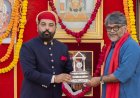
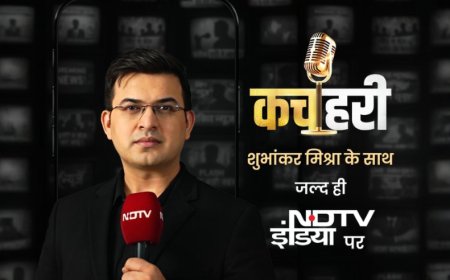
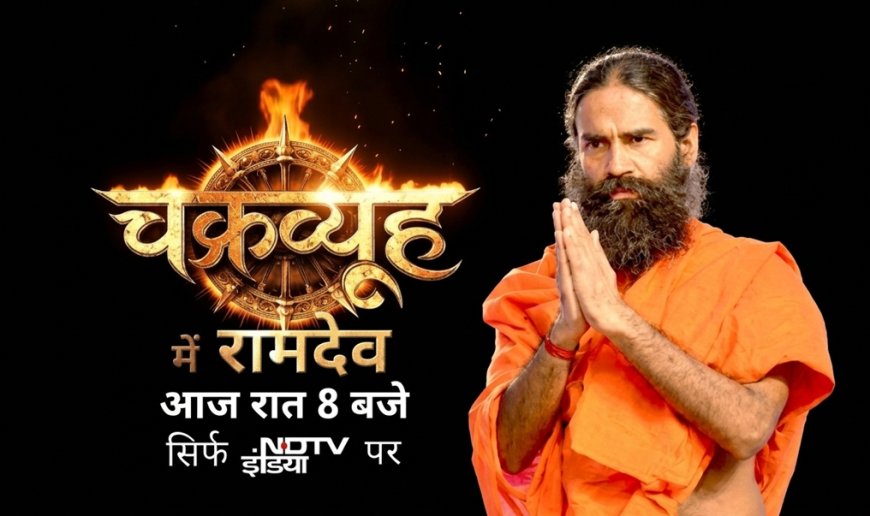
After fourteen years off air, NDTV India has revived Chakravyuh — a long-form, uninterrupted interview format that places a single newsmaker at the centre of a 360-degree conversation with four of the channel's senior anchors simultaneously.
The format is built around a custom-designed round table, with the guest seated on a designated 'Hot Seat' and anchors positioned at each cardinal point — north, south, east, west. The exchange runs for a full sixty minutes with zero commercial breaks and no editorial intervention mid-show. Ten cameras capture every moment in real time, leaving nothing softened, nothing restructured.
Rahul Kanwal, CEO and Editor-in-Chief of NDTV, described the format's ambition plainly — Chakravyuh is designed to create space where multiple editorial perspectives converge at once, allowing viewers to experience a conversation in its complete, unaltered form. Rohit Vishwakarma, Managing Editor of NDTV India, added that removing interruptions and layering multiple viewpoints into a single exchange produces a far sharper understanding of where a subject truly stands.
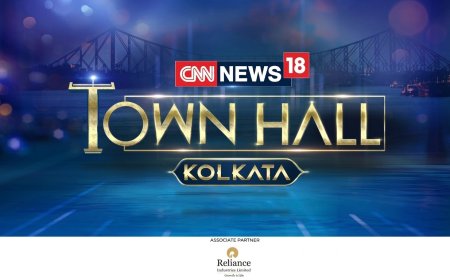
The show premiered on NDTV India at 8 PM on March 27, 2026.
What this means for your brand
This revival is a signal — and media-savvy brand professionals should be paying attention.
Indian audiences are shifting. The same consumer who once tolerated fragmented, break-heavy news programming now binge-watches three-hour podcasts and long-form documentary series without blinking. Attention spans haven't shrunk — they've become selective. People will commit deeply when the content earns it.
Chakravyuh's return validates what forward-thinking content marketers already know: depth is a differentiator. In a media landscape saturated with hot takes and 90-second reels, a format that refuses to cut away is, paradoxically, radical.
For brands that advertise on news television, this raises a practical question. If Chakravyuh runs without commercial breaks, traditional mid-show spot-buying doesn't apply. That pushes brand integration, sponsorship-led content, and pre/post-show adjacency into sharper focus. The brands that figure out how to align with long-form, high-credibility formats — without disrupting them — will earn a quality of audience attention that 30-second spots simply cannot buy.
There's also a content strategy lesson here for brands building their own media properties. The instinct is always to break things into smaller pieces. Chakravyuh argues the opposite: sometimes, letting something breathe creates more impact than editing it to death.
The numbers behind the news
India's news television market remains one of the world's most competitive, with over 400 news channels fighting for viewership across languages and geographies. Yet despite the volume, audience trust in news media has been a persistent challenge across the industry globally.
Long-form, structured formats have historically outperformed fragmented ones on credibility metrics. Podcast listenership in India crossed 150 million in 2024, with long-form interview content among the fastest-growing subcategories. YouTube's top Indian news and commentary channels consistently see their longest videos outperform their short clips in total watch time.
Chakravyuh's 60-minute, no-break architecture is built for exactly this audience behaviour — one that rewards sustained engagement over passive consumption. For NDTV India, it's also a brand-building move: formats with a distinct identity create institutional memory. Chakravyuh had that memory. Reviving it is as much about reclaiming editorial positioning as it is about programming strategy.
The brands.in perspective
Here's what's easy to miss in the Chakravyuh story: this isn't just a show comeback — it's a statement about what serious journalism looks like in 2026. At a time when news formats are getting shorter, louder, and more algorithmically driven, NDTV India has chosen to go longer, quieter, and more structurally demanding. That's a counterintuitive bet. But the most memorable media properties in India have always been built on formats that refused to follow the crowd — and Chakravyuh, at its best, did exactly that. The real question is whether Indian audiences — and advertisers — are ready to reward depth again. We think they are.
Key takeaways for marketers
- Long-form, uninterrupted content is gaining ground as audiences grow more selective
- Traditional mid-show ad spots won't work here — think sponsorships and brand integration
- High-credibility journalism formats offer brand association that outperforms generic reach buys
- NDTV India's revival signals a broader industry rethink on format differentiation
- Brands building owned media should study Chakravyuh's structure — depth creates loyalty
FAQ
What exactly is the Chakravyuh format? It's a 60-minute, unedited interview where one newsmaker faces four NDTV India anchors simultaneously at a round table. No commercial breaks, no editorial cuts — the conversation runs exactly as it unfolds in the room.
Why did Chakravyuh take 14 years to return? NDTV hasn't publicly detailed the gap. The revival appears timed to align with growing audience appetite for long-form, high-accountability journalism — and NDTV India's intent to reclaim a distinctive editorial identity.
How should brands approach advertising around Chakravyuh? Since the format runs without mid-show breaks, brands should explore pre-show and post-show slots, title sponsorships, or content partnerships that complement rather than interrupt the viewing experience.
Let's talk
Is Indian news television finally ready to trade volume for depth? And what does Chakravyuh's return mean for how brands think about journalism adjacency in 2026? Share your perspective in the comments — and follow brands.in for the brand intelligence that keeps you ahead of the conversation.
What's Your Reaction?
 Like
0
Like
0
 Dislike
0
Dislike
0
 Love
0
Love
0
 Funny
0
Funny
0
 Angry
0
Angry
0
 Sad
0
Sad
0
 Wow
0
Wow
0