
























Dainik Bhaskar Wins Ramnath Goenka Awards 2026 for Exposing Trafficking Rackets
Dainik Bhaskar journalists win Ramnath Goenka Awards 2026 for exposing kidney and infant trafficking. Here is why this recognition matters for Indian media and brands.


Introduction
In an era when journalism is frequently reduced to opinion cycles and social media noise, two reporters from Dainik Bhaskar spent months in the field — tracking illegal organ trade networks and infant trafficking rings — and changed lives because of it. Their work did not just win awards. It triggered legislative uproar, judicial intervention, and law enforcement crackdowns. At the Ramnath Goenka Awards for Excellence in Journalism 2026, India's most respected journalism recognition, Dainik Bhaskar received its first-ever honours — and the stories behind those awards deserve to be told in full.
The Big Announcement
Two journalists from Dainik Bhaskar have been recognised at the Ramnath Goenka Awards for Excellence in Journalism 2026, presented by Vice-President of India C.P. Radhakrishnan at a formal ceremony in Delhi. This marks the first time in the publication's history that its journalists have received this honour — a landmark moment for one of India's largest Hindi-language newspapers.
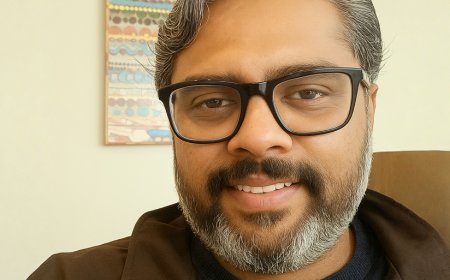
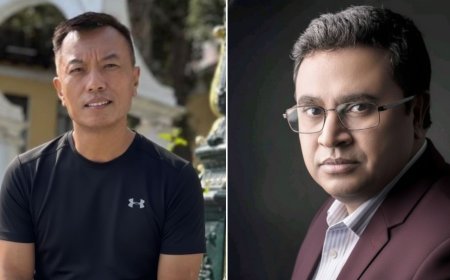
Avadhesh Akodia received the award in the Best Reporting in Hindi category for an investigative series published in 2024 that exposed an extensive kidney trafficking operation running across the India-Bangladesh border. The investigation revealed how economically vulnerable donors and affluent recipients were being systematically exploited through illegal transplant procedures conducted across multiple Indian cities, while regulatory enforcement of organ transplant legislation remained dangerously inadequate.
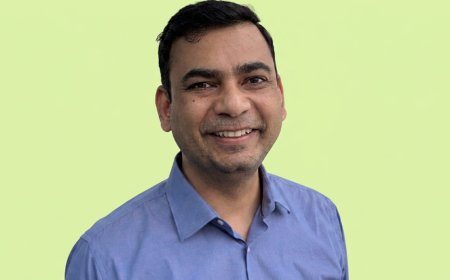
Vijaypal Dudi was honoured in the Uncovering India Invisible category for his 2024 investigation into infant trafficking in the Udaipur region of Rajasthan. His reporting uncovered a network through which children from impoverished tribal communities were being sold to childless couples across India. The consequences were immediate and significant — the Rajasthan State Assembly erupted in response, courts intervened, and enforcement agencies moved decisively against the trafficking network.
What This Means for Your Brand
This story is not just about journalism awards. For media organisations, brand communicators, and content strategists, it carries lessons that are directly applicable to how trust is built — and why it matters.
Investigative depth is the most durable form of media credibility. In a landscape saturated with breaking news alerts and opinion pieces, long-form investigative journalism that produces tangible real-world outcomes is extraordinarily rare. Dainik Bhaskar's recognition demonstrates that audiences and institutions still respond powerfully to reporting that goes beyond the surface. For media brands, this is a reminder that credibility is earned through effort, not frequency.
Hindi-language journalism commands national influence. The Ramnath Goenka Award in the Best Reporting in Hindi category is not a consolation prize for vernacular media. It is recognition that Hindi-language investigative journalism reaches and influences communities that English-language media often fails to penetrate. For brands and communicators targeting Tier 2 and Tier 3 India, this is a reminder of where real public opinion is shaped.
Journalism that creates consequences builds institutional trust. Vijaypal Dudi's infant trafficking investigation did not just inform — it directly triggered state assembly debate and judicial action. For any media organisation, that level of institutional impact is the ultimate validation of editorial purpose.
Contrarian view: Awards recognition, while well deserved, should not become the primary metric of journalistic success. The true measure is whether the systems exposed by these investigations have been durably reformed — or whether enforcement fades once media attention moves on.
The Numbers Behind the News
The Ramnath Goenka Awards, instituted by the RG Foundation in honour of the late Ramnath Goenka — founder of the Indian Express Group — are widely regarded as the most prestigious journalism recognition in India. They evaluate candidates across categories that span language, format, and subject matter, with a consistent emphasis on integrity, impact, and editorial courage.
Dainik Bhaskar is one of India's largest circulating Hindi-language dailies, with a readership base that extends deep into the heartland states of Madhya Pradesh, Rajasthan, Chhattisgarh, and beyond. The publication's reach into semi-urban and rural India gives its investigative work a distribution advantage that few English-language outlets can match when it comes to exposing ground-level realities.
The fact that both winning investigations from 2024 centred on human trafficking — in two entirely different forms — points to a deliberate editorial focus on stories that affect the most economically vulnerable sections of Indian society.
The brands.in Perspective
Here is what this recognition quietly affirms: the most powerful journalism in India right now is not happening in prime-time television studios or verified Twitter threads. It is happening in Udaipur's tribal belts and cross-border organ trade networks, documented by reporters whose names most urban media consumers have never heard. Dainik Bhaskar winning its first Ramnath Goenka Awards in 2026 is a signal to the entire Indian media industry — credibility is not built by chasing reach. It is built by chasing truth, however inconvenient and dangerous that pursuit may be. For brands that advertise in media environments, choosing where your money sits is also a statement about what kind of journalism you value.
Key Takeaways for Marketers
- Dainik Bhaskar receives its first-ever Ramnath Goenka Awards for Excellence in Journalism at the 2026 ceremony
- Avadhesh Akodia honoured for exposing a cross-border kidney trafficking network across Indian cities
- Vijaypal Dudi recognised for uncovering infant trafficking among tribal communities in Udaipur, Rajasthan
- Awards presented by Vice-President of India C.P. Radhakrishnan at a Delhi ceremony
- Both investigations produced direct legislative and judicial outcomes, not just media attention
- Recognition reinforces the credibility and institutional influence of Hindi-language investigative journalism
FAQ Section
Q: What are the Ramnath Goenka Awards for Excellence in Journalism? They are India's most respected journalism awards, instituted by the RG Foundation in memory of Ramnath Goenka, the founder of the Indian Express Group. The awards recognise outstanding journalism across categories including language, format, and subject matter, with emphasis on integrity, courage, and real-world impact.
Q: What did Avadhesh Akodia's award-winning investigation cover? His 2024 investigative series for Dainik Bhaskar exposed an illegal kidney trafficking operation functioning across the India-Bangladesh border. The reporting revealed how economically vulnerable donors and wealthy recipients were being exploited through unlawful transplant procedures in multiple Indian cities, bringing national attention to enforcement failures in organ transplant regulation.
Q: What was the outcome of Vijaypal Dudi's investigation into infant trafficking in Rajasthan? His reporting on the sale of children from impoverished tribal families in the Udaipur region triggered debate in the Rajasthan State Assembly, prompted judicial intervention, and led to direct enforcement action against the trafficking network — making it one of the most consequential pieces of investigative journalism published in India in 2024.
Closing
Real journalism changes things — laws, lives, and the systems that fail the most vulnerable. In a world of content abundance, the stories that matter most are still the ones that required the most courage to tell. What kind of journalism does your brand stand behind? Share your thoughts in the comments below.
Follow brands.in for daily brand intelligence, marketing news, and advertising insights built for Indian business leaders.
What's Your Reaction?
 Like
0
Like
0
 Dislike
0
Dislike
0
 Love
0
Love
0
 Funny
0
Funny
0
 Angry
0
Angry
0
 Sad
0
Sad
0
 Wow
0
Wow
0