

































Flipkart Bets Big on Discovery Shopping With 2 Bold TVCs
Flipkart's latest two-film TV campaign for fashion and home categories taps into India's discovery-led shopping behaviour. Built around joint family dynamics and neighbourhood community moments, the Leo Burnett-conceptualised films prioritise cultural relatability over aspirational aesthetics. Rather than pushing deals or delivery speed, Flipkart is investing in emotional brand equity — signalling a strategic shift toward category-level storytelling that mirrors how Indian women actually make purchase decisions.

Introduction
When did you last buy something you didn't know you needed — until you saw it? That's the insight Flipkart is banking on. As India's e-commerce market matures beyond utility-driven transactions, platforms are racing to own the emotional side of shopping. Flipkart's latest campaign does exactly that — positioning the platform not as a destination you go to, but a discovery you stumble into. Here's why this shift matters for every brand watching India's digital retail space.
What Just Happened
Flipkart has rolled out a two-film television campaign targeting its fashion and home categories, built around one sharp behavioural truth: Indians don't always shop with a list. They shop through conversation, inspiration, and shared moments.
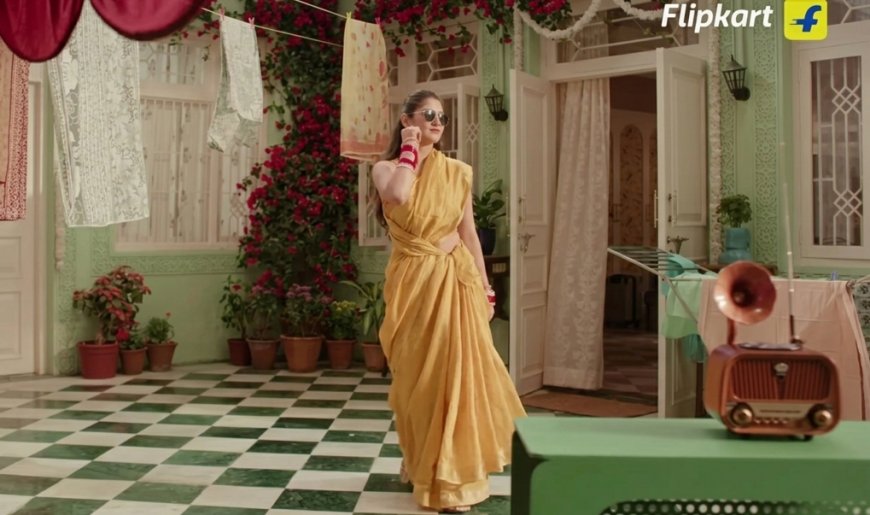
The first film — the Fashion TVC — centres on a newly married woman preparing for a family function. A simple saree-draping session turns into a warm family affair, with her sister-in-law suggesting a trendier blouse, her mother-in-law adding a necklace, and her grandmother offering the right purse. It's less a product showcase, more a cultural snapshot of joint family dynamics driving fashion decisions.
The second film — the Home TVC — unfolds across neighbouring terraces, where two women chatting over tea gradually inspire each other with home décor finds. More neighbours join. A mundane rooftop becomes a vibrant community space, powered by Flipkart's home product range.
Both films were conceptualised by Leo Burnett and will run across TV, digital, and social media channels.
What This Means for Your Brand
Flipkart isn't just selling sarees and cushion covers here. It's selling a shopping mindset — and that's a much bigger strategic play.
Discovery commerce is the next battleground. Platforms like Pinterest, Instagram, and now even WhatsApp have already proven that Indians respond to inspiration-led shopping. Flipkart is now claiming that territory in e-commerce — with a very Desi twist.
Three brand lessons here:
1. Relatability over aspiration. The films don't feature influencers or aspirational lifestyles. They feature the bahu in a joint family, the aunty on the terrace. For Indian brands targeting Tier 1 and Tier 2 women consumers, this approach builds far deeper emotional resonance than premium aesthetics.
2. Community as a conversion trigger. Both films show products being recommended, not advertised. In an era of word-of-mouth and social proof, this mirrors how real purchase decisions happen — especially in fashion and home categories where peer opinion matters enormously.
3. Category-level storytelling pays off. Rather than pushing individual products or offers, Flipkart is building category trust. Brands operating in fashion or home retail should take note: own the occasion, not just the SKU.
Expert Take
Pratik Arun Shetty, VP of Growth and Marketing at Flipkart, framed it plainly: shopping today is "a delightful, impromptu ride where you often encounter products along the way." That's not just a campaign line — it's a data-backed observation.
India's fashion e-commerce market is projected to cross $35 billion by 2028, with discovery and trend relevance cited as primary growth drivers among women shoppers aged 25–45. Meanwhile, the home décor segment has seen a significant post-pandemic uplift, with consumers increasingly personalising their living spaces. Flipkart's decision to run two separate, category-specific films — rather than one generic brand spot — signals a maturing, segmented marketing strategy that recognises different emotional triggers for different product worlds.
The brands.in Perspective
Flipkart's campaign is a quiet masterstroke. While competitors fight on price and delivery speed, Flipkart is planting its flag on feeling. The joint-family fashion moment and the terrace community scene aren't random — they're precision-targeted at the cultural fabric of how Indian women actually make decisions. Leo Burnett has delivered storytelling that feels like memory, not marketing. The risk? Emotional campaigns are hard to measure in the short term. The reward? Brand loyalty that no discount can buy.
Key Takeaways for Marketers
- Discovery-led shopping is a powerful hook for fashion and home categories
- Relatable, culturally rooted storytelling outperforms aspirational ads in Tier 1–2 markets
- Community and peer influence are underused levers in Indian e-commerce campaigns
- Category-level brand building creates longer-lasting equity than product-push ads
- Flipkart's dual-TVC strategy signals the value of audience segmentation at scale
FAQ
Q: What is discovery-led shopping, and why is Flipkart focusing on it? Discovery-led shopping means buying products you didn't actively search for — inspired by browsing, peer suggestions, or content. Flipkart is tapping this behaviour because it drives higher basket sizes and stronger emotional brand attachment than search-driven purchases.
Q: Who is the target audience for Flipkart's new TVCs? The campaign primarily targets Indian women aged 25–45, particularly in joint family and community settings — a segment that drives significant purchasing decisions in fashion and home categories.
Q: How does this campaign differ from typical e-commerce advertising in India? Most e-commerce ads lead with offers, speed, or price. Flipkart's films lead with emotion and cultural relatability — a deliberate shift toward brand-building over performance marketing.
Let's Talk
Does your brand rely too heavily on sales-driven messaging — and not enough on the feeling of discovery? We'd love to hear how you're building emotional equity in your category.
Follow brands.in for daily brand intelligence, campaign breakdowns, and marketing insights built for India's sharpest marketers.
What's Your Reaction?
 Like
0
Like
0
 Dislike
0
Dislike
0
 Love
0
Love
0
 Funny
0
Funny
0
 Angry
0
Angry
0
 Sad
0
Sad
0
 Wow
0
Wow
0