















India's ₹2.78 trillion M&E boom: why it's an AND market now
India's media and entertainment industry hit ₹2.78 trillion in 2025, outpacing GDP growth. At the FICCI–EY M&E Report 2026 launch, JioStar's Kevin Vaz described India as an "AND market" — where digital, television, cinema, and live formats grow simultaneously rather than competing. With the sector projected to cross ₹3 trillion by 2027, brands must rethink channel strategy, sports sponsorship, and AI adoption to stay ahead in India's multi-screen media landscape.

Introduction
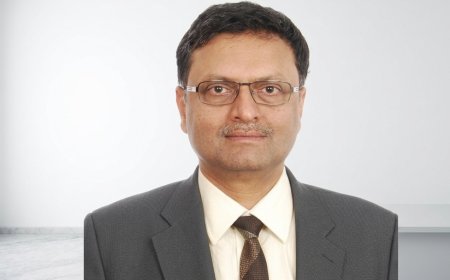
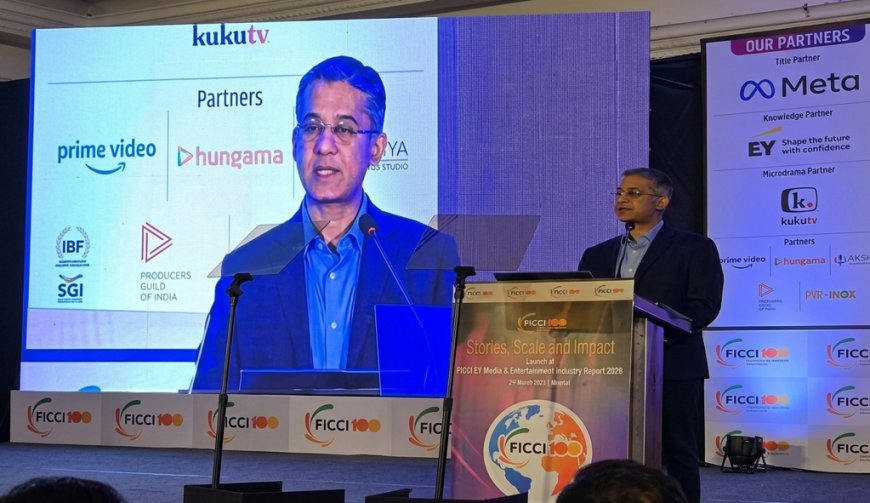
What if the biggest myth in Indian media strategy is the idea of "either/or"? Either you go digital or you stay traditional. Either streaming kills TV, or TV outlasts streaming. The FICCI–EY Media & Entertainment Report 2026, unveiled this week, blows that assumption apart — and Kevin Vaz, Chairman of the FICCI M&E Committee and CEO of JioStar Entertainment, made it the centrepiece of his keynote. India's M&E sector isn't substituting one format for another. It's stacking them. And for Indian brands navigating media planning in 2026, that changes everything.
What just happened
At the official launch of the FICCI–EY Media & Entertainment Report 2026 in Mumbai, Kevin Vaz announced that India's media and entertainment industry closed 2025 at ₹2.78 trillion — surpassing GDP per capita growth and beating even last year's optimistic forecasts. He summarised 2025 in three words: scale, convergence, transformation.
Digital has officially become the industry's largest segment, leading across advertising, subscriptions, and commerce. But what makes India distinct isn't digital's dominance — it's that every other format is growing alongside it. Connected TV, linear television, mobile, cinema, print, and live events are all recording simultaneous expansion. Vaz called this the "AND market" — a framing that captures India's multi-screen, multi-format media reality better than any single-platform narrative could.
The industry is now projected to cross ₹3 trillion by 2027, according to the report — a milestone that would have seemed ambitious just three years ago.
What this means for your brand
For media planners and CMOs, the "AND market" thesis isn't just a philosophical observation — it's a budget-allocation instruction.
Consider three practical scenarios:
First, a FMCG brand targeting Tier 2 India can no longer assume TV alone captures its audience. Connected TV adoption is rising fast in smaller cities, and mobile-first digital consumption is running in parallel. A split-screen strategy — literally and figuratively — is now table stakes.
Second, a D2C brand that went all-in on digital performance marketing in 2023–24 now has a fresh case for rebalancing. Television isn't retreating; it's transforming. Brands that abandoned it entirely may find themselves losing share-of-mind to competitors who stayed.
Third, sports sponsorship is no longer a TV-or-digital decision. The ICC Men's T20 World Cup 2026 final delivered 72.5 million concurrent streams on JioHotstar — a global streaming record — while TV simultaneously brought in hundreds of millions more viewers. Advertisers don't have to choose a screen. They need to buy both.
The contrarian take? Some brands will over-interpret "AND" as permission to spread budgets thin across every channel. That's the wrong lesson. The insight is about audience architecture — understanding which format serves which role in your funnel, not simply being everywhere at once.
The numbers behind the news
The ₹2.78 trillion valuation marks meaningful acceleration. India's M&E sector was valued at ₹2.5 trillion in 2024 — meaning the industry added roughly ₹28 billion in a single year, growing faster than the broader economy. The 2027 projection of ₹3 trillion-plus implies sustained double-digit momentum.
Sectors fuelling this beyond digital include AVGC — Animation, Visual Effects, Gaming, and Comics — which is emerging as a serious global revenue engine, not just a domestic storytelling format. Cinema had a landmark year with over 1,900 releases across languages, and multiple films crossed the ₹1 billion box office mark. Live events and experiential media are scaling rapidly — still largely untapped in terms of total potential.
Artificial intelligence is no longer experimental in Indian M&E. Productions like Mahabharat: Ek Dharmayudh demonstrate how AI is amplifying storytelling at scale, not replacing the humans behind it. The next frontier is policy — specifically, how India regulates AI-generated content and ensures fair compensation for original creators.
The brands.in perspective
India's M&E story is often told as a digital disruption narrative, with traditional formats cast as the casualties. The FICCI–EY 2026 report is a useful corrective. The real story is coexistence at scale — and it creates a genuinely new strategic environment for brands.
The risk, however, is complacency. "AND market" can become a justification for doing nothing differently. The harder discipline is knowing which AND combination works for your category, your customer, and your conversion goals. India has given brands an extraordinary range of formats to work with. Now the job is to be precise, not just present.
Key takeaways for marketers
- India's M&E industry hit ₹2.78 trillion in 2025, beating GDP growth.
- Digital leads, but TV, cinema, and print are all growing simultaneously.
- Sports unites audiences across screens — don't plan for just one.
- AI is reshaping content creation; copyright policy remains unresolved.
- The ₹3 trillion milestone is expected by 2027 — growth is structural.
Frequently asked questions
Q: What does "AND market" mean for Indian media planning? It means multiple formats — digital, TV, mobile, cinema — are growing together rather than replacing each other. Brands should plan for multi-platform reach rather than betting everything on a single channel.
Q: Is television still a viable medium for Indian advertisers in 2026? Yes. Television continues to grow in household reach, and live sports alone demonstrates its power to aggregate mass audiences at scale. It remains essential for upper-funnel brand building.
Q: How is AI changing India's media and entertainment sector? AI is being used across personalisation, content production, and live streaming enhancements. The industry is now pushing for clear government policy on copyright and fair creator compensation as adoption deepens.
Closing
India's media landscape is evolving faster than most marketing calendars can keep up with. How is your brand rethinking its channel mix for the AND market? Drop your thoughts below — and follow brands.in for daily intelligence on where Indian brand strategy is heading next.
What's Your Reaction?
 Like
0
Like
0
 Dislike
0
Dislike
0
 Love
0
Love
0
 Funny
0
Funny
0
 Angry
0
Angry
0
 Sad
0
Sad
0
 Wow
0
Wow
0