


























Blue Star Skips IPL 2025: Why India's AC Major Is Betting Big on Digital
Blue Star skips IPL 2025, shifting 50% of summer ad spend to digital. Learn why the AC brand is betting on YouTube, micro-influencers, and real-time agility.


Introduction
What happens when one of India's most trusted air-conditioning brands walks away from the biggest sporting event on Indian television? Blue Star has done exactly that — opting out of IPL 2025 advertising entirely, and redirecting its summer marketing firepower toward digital platforms. With nearly two-thirds of its annual sales riding on just four months of peak summer demand, this isn't a casual budget reshuffle. It's a calculated strategic pivot. Here's what's driving the shift — and what every Indian marketer can learn from it.
What Just Happened
Blue Star, which commands a 14.3% market share in India's residential air-conditioner segment, has formally stepped away from IPL advertising this season. The decision comes from Girish Hingorani, Vice President — Marketing (Consumer Products) and Corporate Communications, Blue Star, who revealed that IPL once consumed nearly 70% of the brand's summer media spend.
The company's total annual advertising budget stands at approximately ₹60 crore, with around ₹40 crore deployed exclusively during the summer quarter — its most commercially critical period. Previously, a bulk of that summer allocation flowed into IPL. This year, that equation has changed completely, with 50% of summer spend now directed toward digital, and the remainder split between traditional television and out-of-home media.
The trigger? A combination of media measurement concerns, lack of campaign flexibility, and the unpredictable nature of weather-driven demand that directly impacts AC sales.
What This Means for Your Brand
Blue Star's decision is more than a media buy shift — it's a signal to the entire consumer durables and seasonal marketing ecosystem in India.
Flexibility over reach. IPL doesn't allow brands to pause or switch off campaigns mid-tournament. For a category like air conditioners, where demand spikes are directly tied to temperature crossing the 40°C mark, the inability to optimise in real time is a significant commercial risk. Last year, unseasonal rains dampened cooling demand during peak season — and brands locked into IPL spends had no exit route.
The CTV certainty problem. Connected TV buying on IPL has shifted from fixed-slot purchases to a CPM (cost per impression) model. Earlier, a 10-second slot guaranteed visibility. Now, impressions can be unevenly distributed, reducing control over reach and frequency — a critical requirement for a seasonal brand needing repeated consumer exposure at precisely the right moment.
Tier 2 and beyond is the real game. With AC penetration at just 35 million households out of 350 million, the next growth wave will come from smaller towns. IPL's premium urban-skewed audience profile may simply not be the most efficient vehicle for reaching first-time buyers in Tier 3 to Tier 5 markets. Digital — particularly YouTube and micro-influencer networks — offers far sharper geographic and demographic targeting.
Contrarian view? Some strategists argue that skipping IPL risks ceding brand salience at a moment when competitors are spending heavily. But Blue Star's counterargument — measurable efficiency over mass visibility — is hard to dismiss.
The Numbers Behind the News
The financial logic is compelling. Of Blue Star's summer digital allocation, YouTube alone accounts for nearly 70% of digital spends, with the balance going into display advertising and influencer-led content. For traditional media, 80% of the non-digital summer budget flows into television — news channels, general entertainment, and free-to-air movie platforms — with the remainder in OOH.
Year-round, Blue Star also runs performance marketing on Amazon and Flipkart, accounting for 20–25% of its annual spend — targeting in-market consumers actively researching purchases even outside peak season.
The macro opportunity is significant. India's room AC industry is projected to grow from approximately 14 million units today to 30 million units by FY30, expanding at a 19% CAGR. Blue Star is targeting a market share increase from 14.3% to 15% by FY27.
Meanwhile, on the product side, the brand has launched 125 new AC models, all BEE-compliant, including its premium Iconia series featuring a Midnight Silver design aesthetic targeting upgrade buyers.
The brands.in Perspective
Blue Star's IPL exit is a quiet but significant moment for Indian marketing. For years, IPL has been treated as an almost mandatory summer ritual for consumer brands — a rite of passage more than a strategic choice. Blue Star is challenging that assumption with data, discipline, and a clear-eyed view of what drives actual sales in a weather-sensitive, geography-fragmented market. If more brands follow this lead, IPL's dominance as the default summer media vehicle may face a genuine reckoning.
Key Takeaways for Marketers
- IPL's CTV model shift from fixed slots to CPM reduces visibility certainty for seasonal brands
- Digital flexibility allows real-time campaign optimisation based on weather and regional demand
- YouTube dominates Blue Star's digital mix, capturing 70% of digital summer spends
- Micro-influencers in Tier 3–5 markets are becoming critical for first-time buyer outreach
- Performance marketing on e-commerce platforms runs year-round, not just in peak season
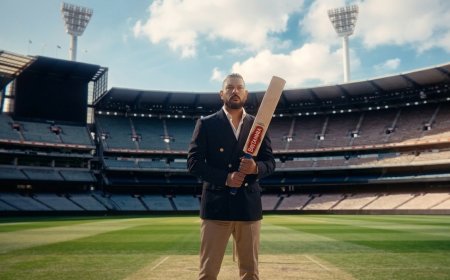
- Virat Kohli's 'Garmi Ki Chhutti' campaign is being redeployed digitally after limited exposure last year
Frequently Asked Questions
Q1. Why has Blue Star opted out of IPL advertising in 2025? Blue Star cited two key reasons: the lack of campaign flexibility during IPL and the shift to CPM-based CTV buying, which reduces control over ad visibility and reach for a weather-dependent, seasonal category.
Q2. Where is Blue Star redirecting its IPL budget? Approximately 50% of its summer advertising budget is now allocated to digital platforms, with YouTube as the primary channel. The remainder is split between traditional TV and out-of-home advertising.
Q3. How does Blue Star's media strategy differ for first-time versus repeat buyers? First-time buyers, primarily from smaller towns, are targeted through performance-focused messaging and micro-influencer campaigns. Repeat or upgrade buyers receive premium-focused communication highlighting smart connectivity and AI-driven cooling features.
Closing
Blue Star's decision to trade IPL airtime for digital agility raises a question every marketer in India should sit with: Are you buying media out of habit, or out of strategy? When demand is seasonal, weather-dependent, and increasingly Tier-2 driven, the smartest spend may not be the loudest one. What's your take — is IPL still worth it for seasonal categories? Tell us in the comments, and follow brands.in for sharp brand intelligence that keeps Indian marketers ahead of the curve.
What's Your Reaction?
 Like
0
Like
0
 Dislike
0
Dislike
0
 Love
0
Love
0
 Funny
0
Funny
0
 Angry
0
Angry
0
 Sad
0
Sad
0
 Wow
0
Wow
0