


















The Dhurandhar Effect: How Smart Brands Turned 6 Words Into a Marketing Movement
How Indian brands used the Dhurandhar dialogue trend for reactive marketing — from mental health campaigns to civic messaging. Key lessons for Indian brand managers.

Introduction
Six words. That is all it took. When a single line of dialogue from a Hindi film stopped millions of Indians mid-scroll, it did not just go viral — it created a cultural entry point that brands, institutions, and healthcare companies quietly walked through. The Dhurandhar wave is one of the more fascinating marketing phenomena of 2025-26, not because brands jumped on a trend, but because the smartest ones waited to understand it first. In an attention economy where relevance is rented by the second, a few brands managed to build something that actually lasted. Here is how they did it — and what every Indian marketer can learn from it.
The Big Announcement
The trigger was a single line of dialogue — "Bachcha hai tu mera" — delivered with quiet warmth in the film Dhurandhar. The line resonated far beyond its cinematic context. It carried emotional weight that felt personal, parental, and universally Indian all at once.
What followed was a textbook cultural cascade. The format spread from fan pages to meme accounts, from WhatsApp forwards to brand social handles. Music label T-Series appears to have been among the first to formalise the trend with a stylised creative, establishing a template that blended the film's dramatic aesthetic with meme-friendly copy.
From there, the wave moved fast and wide. FMCG brands, quick commerce platforms, pharmaceutical companies, ticketing apps, and even government institutions stepped into the conversation — each adapting the format to their own voice and purpose.
What made this trend unusual was its refusal to peak and fade on schedule. Instead of burning out, it kept shapeshifting — finding new formats, new causes, and new categories to inhabit.
What This Means for Your Brand
The Dhurandhar trend offers a rare case study in the difference between trend-chasing and cultural contribution — and the commercial outcomes of each.
The brands that merely borrowed the format got momentary engagement. Packaged foods brand Bonn adapted the dialogue structure to a health message around its zero-maida bread product, keeping the execution product-led and functional. Quick commerce platform Blinkit used the film's energy for an outdoor campaign positioning a mango drink as summer's answer to the heat. Ticketing platform Magicpin referenced the debate around the film itself to drive footfalls and conversions through a FOMO-led billboard. These were competent, timely executions — fast, topical, and scroll-stopping.
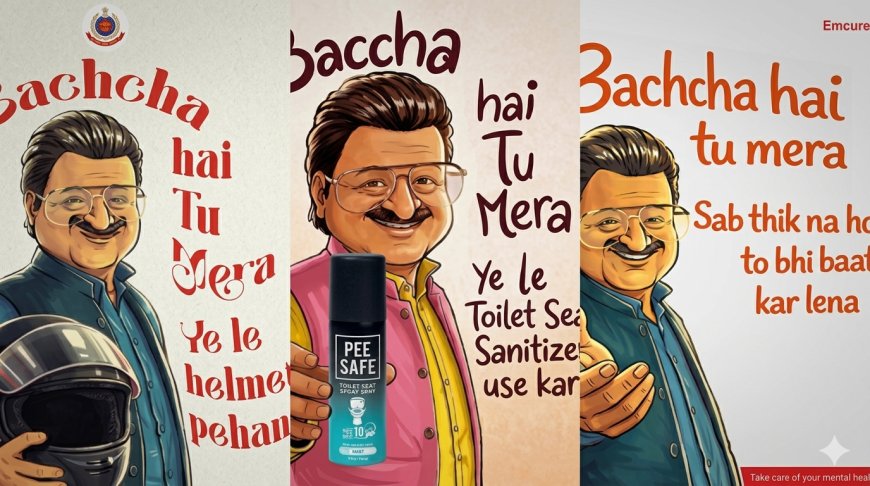
The brands that went deeper achieved something more durable. Delhi Police used a beloved character from the film to deliver road safety messaging — transforming a caricature into a civic nudge that felt like advice from a friend rather than a government directive. The result was shared not because it was entertaining, but because it felt genuine.
Emcure Pharmaceuticals made perhaps the most considered entry. By reframing the trend's core emotional line around mental health — encouraging people to speak up even when things are not fine — the brand made a clinically important topic feel approachable through cultural familiarity. In India, where mental health conversations remain deeply stigmatised, that is not a small achievement.
PeeSafe kept its execution deliberately simple, aligning the emotional warmth of the dialogue with a product recommendation that felt natural rather than forced. No elaborate setup, no overextended metaphor — just a brand that read the room and showed up appropriately.
The Numbers Behind the News
India's meme economy is not a fringe phenomenon. It is a primary distribution channel for culture, opinion, and increasingly, brand messaging. With over 500 million active social media users and WhatsApp functioning as the country's de facto content distribution network, a well-timed cultural hook can generate organic reach that paid media budgets struggle to replicate.
What the Dhurandhar trend quantifies — anecdotally if not statistically — is the value of emotional resonance over production value. None of the standout brand executions in this wave were expensive. They were observant. They required a genuine reading of why a piece of dialogue connected with people, and then a considered decision about how to add to that conversation rather than extract from it.
Amul, India's perennial champion of real-time topical marketing, joined the wave with its signature blend of wordplay and product relevance — a reminder that speed and sharpness, not budget, are the primary ingredients of effective cultural marketing.
The brands that thrived were not the ones with the largest production teams. They were the ones with the clearest cultural instincts.
The brands.in Perspective
The Dhurandhar wave quietly separated two types of brand communicators: those who see a trend as inventory to exploit, and those who see it as a conversation to join. The former got clicks. The latter got something harder to measure and far more valuable — genuine cultural affinity. What Emcure did with mental health messaging inside a Bollywood meme format should be studied in every Indian marketing classroom. It proved that purpose-driven communication does not require a solemn campaign. Sometimes, six words of borrowed warmth can open a door that years of awareness advertising could not. That is the real lesson here.
Key Takeaways for Marketers
- Cultural trends reward contribution over consumption — add to the conversation, don't just borrow from it
- Emotional resonance travels further than production value in India's meme economy
- Purpose-driven brands can use pop culture as an entry point for serious conversations
- Speed matters, but a well-timed thoughtful entry beats a fast generic one every time
- The best reactive marketing feels like it was always meant to be there
FAQ
Q: What is reactive marketing and why is the Dhurandhar trend a good example of it? Reactive marketing involves brands responding in real time to cultural moments, news events, or viral trends. The Dhurandhar trend is a strong example because it shows how brands across categories — from FMCG to healthcare to civic institutions — adapted a single cultural hook to serve very different communication purposes effectively.
Q: How can smaller Indian brands participate in viral trends without seeming opportunistic? The key is relevance over speed. Ask whether your brand's message genuinely adds something to the conversation — humour, utility, emotional resonance, or a fresh angle. If the connection between your brand and the trend requires explanation, it probably is not the right fit.
Q: Why did the Dhurandhar trend last longer than most viral moments? Because the core emotional hook — a line expressing warmth, care, and belonging — was universally relatable across age groups, regions, and contexts. Trends with purely comedic or shock-driven appeal fade quickly. Trends anchored in genuine human emotion have longer cultural shelf lives.
Let's Talk
Has your brand ever turned a cultural moment into a meaningful conversation — or did it settle for just being topical? The difference between the two is where real brand equity gets built. Share your thoughts below.
Follow brands.in for daily brand and marketing intelligence that keeps India's sharpest marketers one step ahead of the cultural curve.
What's Your Reaction?
 Like
0
Like
0
 Dislike
0
Dislike
0
 Love
0
Love
0
 Funny
0
Funny
0
 Angry
0
Angry
0
 Sad
0
Sad
0
 Wow
0
Wow
0